The Man Who Tried to Patent His Own Life Story to Outsmart the CIA

Somewhere in the archives of the U.S. Patent and Trademark Office, buried beneath mountains of mechanical drawings and chemical formulas, sits one of the strangest applications ever submitted to a federal agency. It wasn't for a new engine. It wasn't for a better mousetrap. It was filed by a man who wanted to legally own himself.
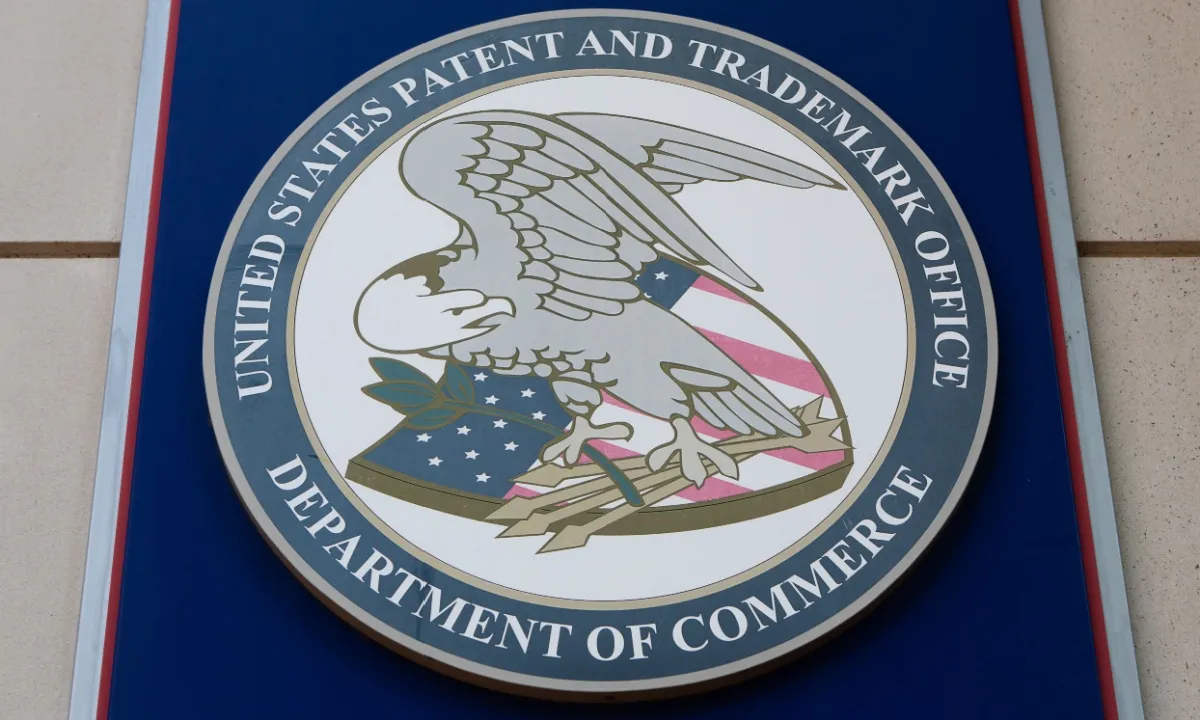 Photo: U.S. Patent and Trademark Office, via www.pymnts.com
The year was 1963. The Cold War was running hot. And a former Soviet intelligence officer living under a new name in a quiet Ohio suburb had convinced himself — not entirely without reason — that the U.S. government was about to steal his identity and give it to someone else.
A Defector With a Very Specific Problem
By the early 1960s, the CIA had developed a sophisticated system for managing defectors. You came over, you gave up what you knew, and in exchange you received a new name, a new backstory, and a new life somewhere unremarkable. Ohio was a popular destination. Unremarkable was kind of the whole point.
The man at the center of this story — identified in declassified documents under the alias "Dmitri Volkov," though historians believe this was itself a cover name — had defected in the late 1950s and settled into exactly this kind of quiet American anonymity. He worked a clerical job. He mowed his lawn. He was, by all outward appearances, an ordinary midwestern nobody.
But Volkov was not at peace. He had heard rumors — possibly exaggerated, possibly not — that the CIA occasionally recycled the biographical frameworks of older defectors to create cover identities for active operatives. The idea was unsettling: his invented American life, his carefully constructed persona, could theoretically be stripped away and handed to a stranger. He would become nobody. Again.
So he did what any reasonable person living through a paranoid chapter of American history might do. He called a patent attorney.
The Application That Broke the Rulebook
Volkov's legal argument was, in its own strange way, genuinely creative. He reasoned that his life story — the specific combination of biographical details, personal history, and documented experiences that constituted his American identity — represented an original creative work. Under U.S. intellectual property law, original creative works could be protected. If a novelist could copyright a story, why couldn't a man copyright his story?
The patent application, which was actually filed as a hybrid copyright and intellectual property claim, ran to nearly forty pages. It catalogued his biographical details, his documented history, his employment records, and even his medical files — all as evidence of a unique, original, and personal creation that belonged exclusively to him.
The U.S. Patent Office received the application and, by all accounts, came to a complete stop.
There was no existing framework for this. Copyright law covered authored works — books, music, art. It did not, at least not in any way anyone had previously tested, cover the raw facts of a human life. The Patent Office forwarded the claim to the Copyright Office. The Copyright Office sent it back. It reportedly bounced between agencies for the better part of two years before anyone produced a formal written response.
The Legal Battle Nobody Wanted to Have
The case that followed was less a courtroom drama than a prolonged bureaucratic headache. Volkov retained legal counsel and pushed the matter through multiple levels of review. Government attorneys, tasked with responding to the claim, found themselves in the awkward position of having to argue — on paper, officially — that a human being could not hold intellectual property rights over the facts of his own existence.
Which sounds obvious. Except that when you sit down to write the legal brief explaining why it's obvious, it turns out to be surprisingly difficult.
The core problem was this: copyright law protects original expression, not facts. A biography written about Volkov could be copyrighted by its author. But the underlying facts — where he was born, what he had done, who he had been — existed independently of any authored work. You cannot copyright a fact. You cannot patent a life.
The Patent Office ultimately issued a formal rejection in 1965, citing the non-copyrightability of biographical facts and the absence of any patentable invention. Volkov appealed. The appeal was denied. He filed again with slightly modified language. That was denied too.
What the Story Actually Reveals
Volkov never won his case. His identity, as far as available records suggest, was never actually reassigned to anyone else — that fear may have been more paranoia than reality, though in the context of 1960s intelligence operations, paranoia was not always irrational.
But the episode left a strange mark on legal history. Several intellectual property scholars have cited the Volkov case — obliquely, since full declassification is still incomplete — as an early and unusual stress test of copyright doctrine. It raised questions that would resurface decades later in debates about digital identity, data ownership, and the right to control one's own personal narrative.
More than anything, though, it captures something vivid about the particular madness of the Cold War era. Here was a man so thoroughly destabilized by the machinery of espionage and geopolitical gamesmanship that he turned to patent law as his last line of defense against the most powerful intelligence agency in the world. He couldn't fight the CIA with a gun. He couldn't fight them with money. So he tried to fight them with paperwork.
In a way, that's almost admirable.
The U.S. Patent Office, for its part, has no publicly listed category for applications of this nature. Which means that somewhere in their records, Volkov's submission probably still sits in a folder marked something like "Miscellaneous — Unclassifiable."
Which, honestly, seems about right.