They Voted to Go Dry. Then the Whiskey Showed Up Anyway.
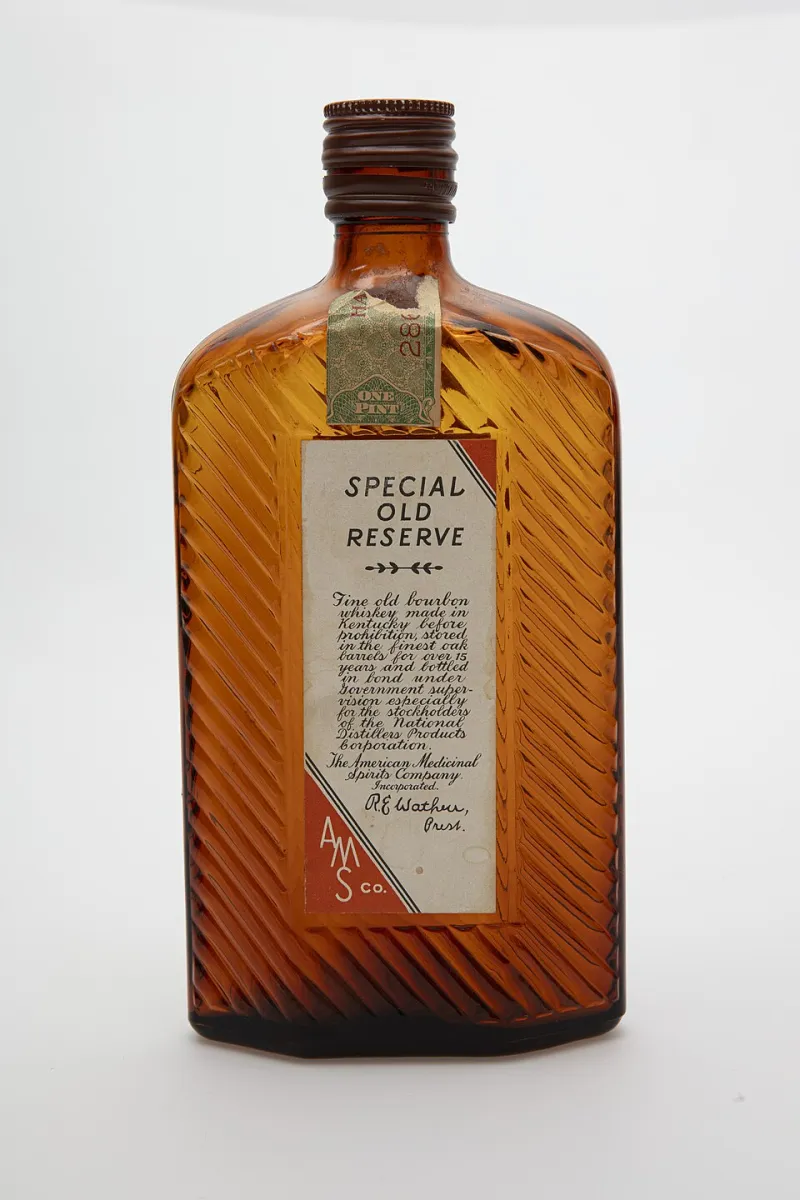
Photo: American Medical Spirits Company; Harry E. Wilken Distillery, Public domain, via Wikimedia Commons
The Morning After the Vote
The celebration in Barton County must have felt earned. It was the early 1900s, the temperance movement was cresting across the American heartland, and a particular stretch of central Kansas had just voted — loudly and decisively — to ban alcohol within its borders. Local ministers gave sermons. The county newspaper ran congratulatory editorials. Civic leaders shook hands.
Nobody was thinking about geography. Nobody was thinking about the roads. And absolutely nobody was thinking about what happens when you draw a hard line through the middle of a region that has always moved things from one place to another.
Within a few years, the driest town in Kansas had become, depending on who you asked, either the wettest or the most hypocritical — and the distinction barely mattered, because the whiskey was flowing either way.
Location, Location, Location
Here's the problem with declaring a small Midwestern town alcohol-free: you can't move the town.
The community sat at a natural crossroads — the kind of geography that had made it a trading hub for decades before anyone thought to vote on what could and couldn't pass through it. Rail lines converged nearby. Two regional roads intersected just outside the county seat. Farmers, merchants, and travelers had been moving goods through this corridor for years, and they were not going to stop just because a ballot measure told them to.
Wet counties existed in every direction. Missouri to the east had no such restrictions. Oklahoma territory to the south was a patchwork of legal gray zones. And the people who moved goods between these places needed somewhere to stop, rest, store inventory, and collect payment.
They picked the dry town. Of course they did. A dry town had fewer law enforcement resources dedicated to liquor. A dry town's officials were focused on moral symbolism, not supply chain logistics. A dry town was, paradoxically, the safest place in the region to move illegal alcohol.
The Sheriff Who Made It Official
Every great accidental story needs a human hinge point, and this one found its in the form of a county sheriff whose name appears in local records with the kind of frequency that suggests either extraordinary dedication to law enforcement or extraordinary dedication to looking the other way.
Historical accounts from the era describe a law enforcement culture in the county that was, to put it generously, flexible. Fines were levied inconsistently. Storage facilities on the edge of town that held suspicious quantities of freight were inspected rarely and briefly. Certain roads that led to certain properties were apparently outside the regular patrol rotation.
Whether the sheriff was actively paid off, simply philosophically opposed to enforcing the law, or just catastrophically overworked is a question that local historians have debated for a century. What's not debated is the outcome: under his watch, the county became a recognized waypoint on what bootleggers of the era called the "Kansas Corridor" — an informal network of dry-county routes that allowed alcohol to move across the state with minimal interference.
The Infrastructure Decision That Sealed It
If geography set the table and the sheriff handed out the menus, one particularly ill-timed infrastructure decision served the meal.
In the years just before Prohibition went national in 1920, county officials — in a genuine attempt to modernize and attract commerce — funded the improvement of a key road running through the southern edge of the county. They paved it. They widened it. They installed proper drainage so it could be used year-round, even in the muddy Kansas spring.
It was, by all accounts, a well-intentioned public works project.
It was also, immediately and obviously, the best road in a four-county radius for moving wagons and early trucks loaded with freight that didn't need to be inspected too closely. Bootleggers from as far as Wichita reportedly rerouted their operations specifically to take advantage of the new surface. The road that was supposed to bring legitimate commerce to a morally upright community instead became the preferred highway for exactly the trade that community had voted to eliminate.
Local legend holds that during peak years, more alcohol moved through the county in a single month than the county's own saloons had served in their entire pre-prohibition history.
The Legacy Nobody Quite Admits
National Prohibition arrived in 1920 and, in a twist of genuine irony, actually reduced the county's bootlegging activity — because now everyone around it was dry too, which eliminated the geographic advantage that had made the corridor so useful.
But the story didn't vanish. It calcified into local memory in the way that embarrassing civic stories often do: half-acknowledged, quietly celebrated, and occasionally deployed at county historical society meetings when someone needs a good story to close out the evening.
A small exhibit at one regional history museum reportedly includes a section on the temperance vote and its unintended consequences, framed with the kind of gentle humor that only becomes possible about a hundred years after the fact.
What the Driest Town Taught Us
The Kansas bootlegging corridor story is funny, but it's also genuinely instructive. It's a case study in the gap between civic intention and physical reality — in what happens when moral legislation meets geography, infrastructure, and human incentive and doesn't come out ahead.
The town voted for virtue. It got vice anyway. And the road it built to attract honest commerce became the fastest route for dishonest freight.
There's a lesson in there somewhere. Whether you take it as a warning about unintended consequences or just a very good story about how hard it is to stop people from doing what they want to do — either way, the whiskey kept moving.