Blueprint Chaos: The Mail Mix-Up That Created Chicago's Most Celebrated Architectural 'Mistake'
The Package That Changed Architecture
Sometimes the most brilliant designs come from the most mundane mistakes. In the spring of 1923, a postal worker in Chicago made what seemed like an insignificant error—delivering a package of architectural blueprints to the wrong address. That simple mix-up would eventually create one of the city's most admired buildings and prove that accident can be a more innovative architect than intention.
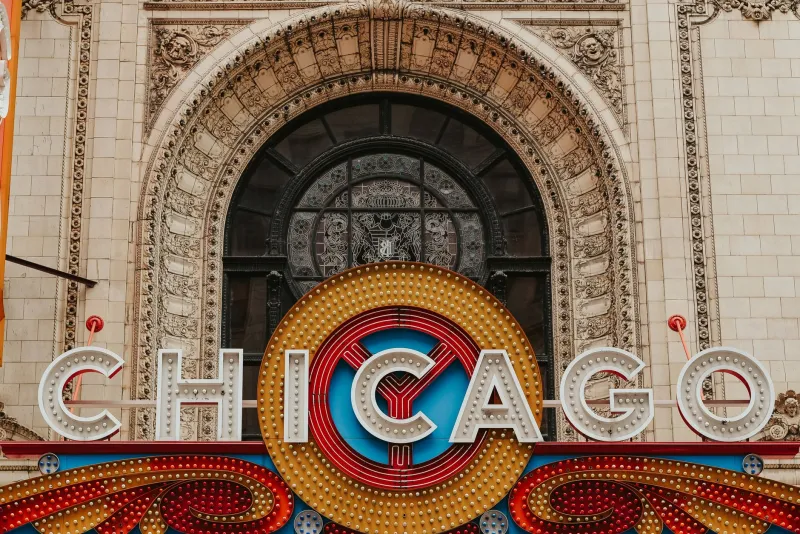
The building in question still stands today on North Michigan Avenue, its distinctive facade drawing admiring glances from passersby who have no idea they're looking at one of history's most successful architectural accidents.
 Photo: North Michigan Avenue, via tierramare.de
When Plans Go Wrong
The story begins with two separate construction projects happening simultaneously in Chicago's bustling downtown district. The first was a modest office building commissioned by the Midwest Insurance Company, designed in the conservative neoclassical style that dominated American commercial architecture in the 1920s. The second was an experimental arts center for the Chicago Cultural Society, featuring bold geometric patterns and innovative use of materials—what would later be recognized as early Art Deco design.
 Photo: Chicago Cultural Society, via media.sportsplatform.io
Architect Harrison Blackwell had spent months perfecting the arts center plans, incorporating cutting-edge European design principles that were just beginning to influence American architecture. Meanwhile, his colleague Robert Sterling had created straightforward, business-like plans for the insurance building—functional, unremarkable, and exactly what his conservative clients had requested.
The two sets of blueprints were supposed to be delivered to their respective contractors on the same day. Instead, thanks to a harried postal worker juggling too many packages, they ended up swapped.
The Discovery That Came Too Late
Contractor James Murphy received what he thought were the plans for the Midwest Insurance Company building and began construction immediately. The blueprints seemed unusually elaborate for an insurance office, but Murphy assumed his clients had decided to make a bold statement. After all, Chicago was booming, and companies were competing to build the most impressive headquarters.
Meanwhile, across town, contractor William Hayes looked at his delivered plans with confusion. The Chicago Cultural Society had specifically requested something avant-garde, but these blueprints looked like every other office building in the Loop. Hayes called the architects' office but was told the plans were correct—apparently, there had been a last-minute change of vision.
Neither contractor realized the mix-up until both buildings were nearly complete. By then, changing course would have meant starting over entirely, costing both projects hundreds of thousands of dollars—a fortune in 1920s money.
The Accidental Masterpiece
What emerged from this confusion was remarkable. The Midwest Insurance Company found itself with a building that was decades ahead of its time—clean geometric lines, innovative window arrangements, and decorative elements that seemed to predict the future of American architecture. The conservative businessmen who had commissioned it were initially horrified, but the building drew so much positive attention that they decided to embrace their accidental avant-garde headquarters.
The Chicago Cultural Society, meanwhile, got a stately neoclassical building that, while not what they had envisioned, provided excellent acoustics and flexible space for their programs. They adapted their programming to match their unexpectedly traditional new home.
The Critics Take Notice
Within months of completion, the insurance building was being featured in architectural journals across the country. Critics praised its "visionary synthesis of European modernism and American practicality." The building's innovative facade, with its rhythmic window patterns and subtle geometric ornamentation, was hailed as a breakthrough in commercial architecture.
Architect Harrison Blackwell found himself unexpectedly famous for designing what magazines called "the building that bridges two architectural eras." He gave interviews about his "bold decision" to apply experimental design principles to a traditional commercial commission, never revealing that the whole thing had been a mistake.
The Truth Emerges
The real story didn't come to light until 1987, when architectural historian Dr. Sarah Chen was researching Chicago's Art Deco movement for her doctoral dissertation. While going through archived correspondence at the Chicago Historical Society, she discovered a series of increasingly frantic letters between the architects, contractors, and clients from the summer of 1923.
 Photo: Dr. Sarah Chen, via images-cdn.9gag.com
The letters revealed the entire mix-up in embarrassing detail—the postal error, the confusion, the decision to proceed rather than start over, and the architects' agreement to never discuss what had really happened. Chen's discovery made headlines in architectural publications and forced a reevaluation of one of Chicago's most celebrated buildings.
The Irony of Innovation
Perhaps the most fascinating aspect of the story is what it reveals about architectural innovation. The insurance building's design, created for an experimental arts center, worked perfectly as commercial architecture precisely because it wasn't trying to be commercial architecture. Its bold elements, freed from the constraints of conventional business building requirements, created something genuinely new.
Conversely, when Blackwell was consciously trying to create innovative design for the arts center, he produced something that, while competent, lacked the spark of his "accidental" masterpiece. The insurance building succeeded because it was designed for a completely different purpose—and that mismatch created unexpected harmony.
Legacy of a Beautiful Mistake
Today, the former Midwest Insurance Company building houses a boutique hotel that celebrates its unusual origin story. The lobby displays copies of the original mixed-up blueprints alongside photos of the building under construction. Architecture students still visit to study how accident and intention can collaborate to create something neither could achieve alone.
The building stands as a monument to the creative power of happy accidents—and a reminder that sometimes the best way to innovate is to stop trying so hard to be innovative. In a profession obsessed with intentionality and vision, Chicago's most beautiful mistake proves that the mail carrier might occasionally be the most important member of any architectural team.