He Came to Fix the Pipes. He Found a Lost City.
The Work Order That Rewrote History
On an ordinary weekday morning somewhere in the suburban ring outside Albuquerque, New Mexico, a licensed plumber arrived at a residential address with a work order, a crew, and the reasonable expectation that his day would involve a burst pipe, some muddy digging, and a repair bill. The desert Southwest is hard on underground infrastructure. Pipes fail. Plumbers get called. This is the unglamorous reality of keeping a neighborhood functioning.
What nobody expected — not the homeowner, not the plumber, not the city utilities department that had issued the excavation permit — was that roughly four feet beneath the surface of a suburban street, the equipment would strike something that had been waiting there for approximately one thousand years.
The preserved rooftop of a pre-Columbian pueblo structure, intact enough to make the plumber's crew stop digging and start making phone calls, had just been found by accident. And it was only the beginning.
The City That Wasn't on Any Map
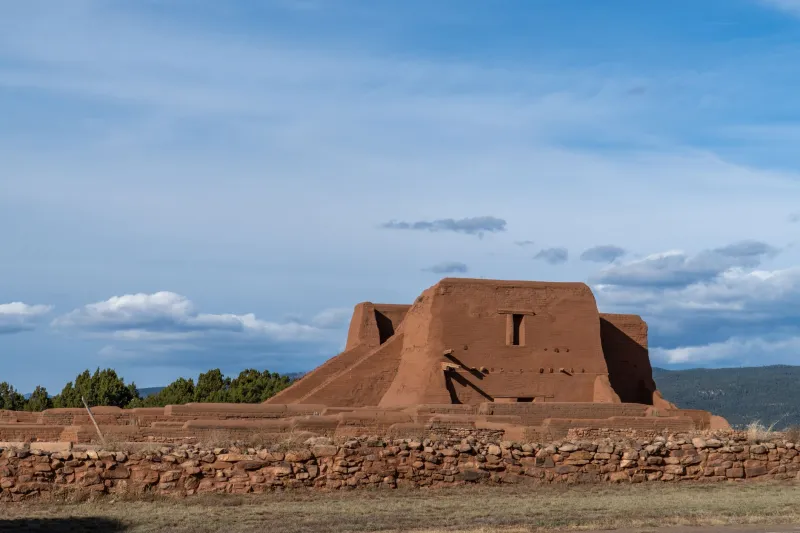
The American Southwest is among the most archaeologically dense regions in the United States. Beneath its mesas, arroyos, and desert flats lie the remnants of civilizations that built sophisticated cities, engineered irrigation systems, and developed complex social structures centuries before European contact. The Ancestral Puebloans — sometimes referred to by the older term Anasazi, though many Indigenous scholars prefer the former — left behind sites ranging from the spectacular cliff dwellings of Mesa Verde to hundreds of smaller settlements that remain incompletely documented.
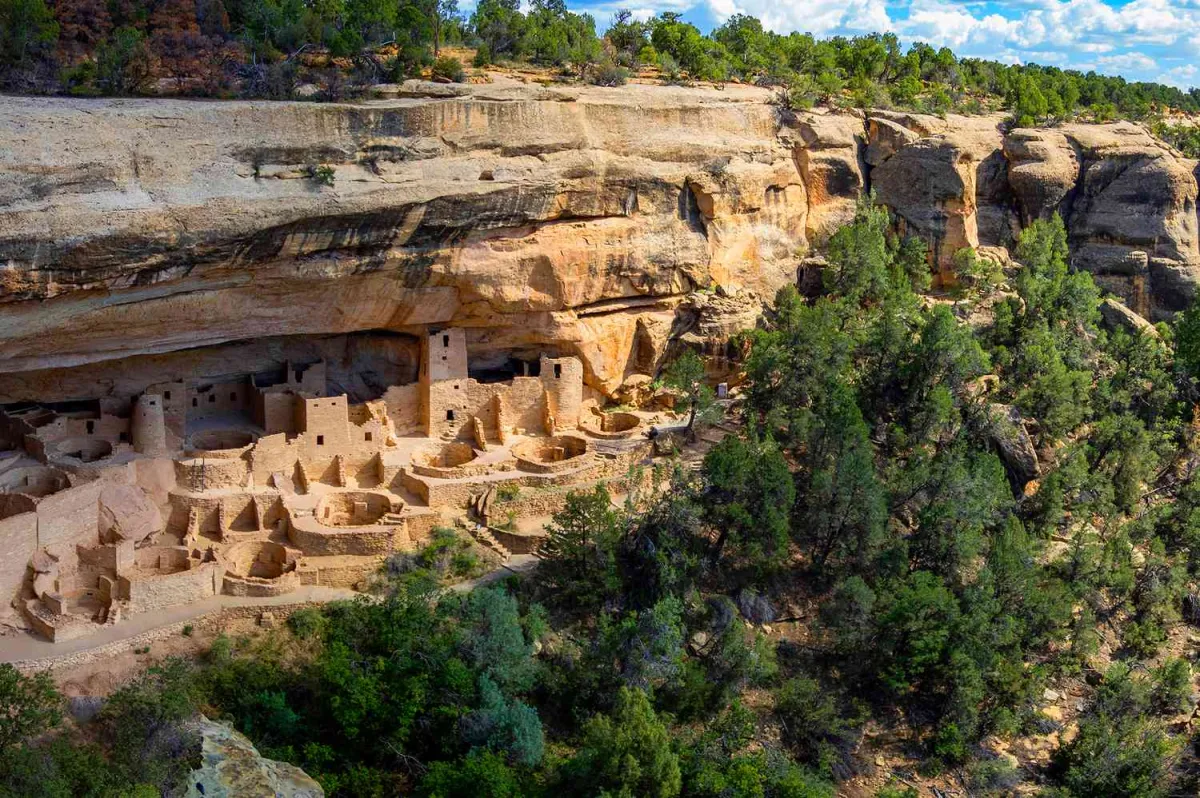 Photo: Mesa Verde, via www.travelandleisure.com
Archaeologists working in the greater Albuquerque region had long suspected that a significant settlement existed somewhere in the area based on ceramic scatter patterns, oral histories from Pueblo communities, and fragmentary survey data. The problem was suburban expansion. By the time systematic archaeological survey technology was sophisticated enough to detect buried structures non-invasively, significant portions of the suspected area had already been developed — roads paved, foundations poured, utilities buried.
The settlement was, in effect, hidden beneath the infrastructure of modern life. Finding it would require either extraordinary luck or the kind of comprehensive ground-penetrating radar survey that nobody had the budget to commission across an entire residential neighborhood.
As it turned out, what was actually required was a burst pipe.
Four Feet Down and a Thousand Years Back
The discovery triggered an immediate response from the New Mexico State Historic Preservation Office, which dispatched field archaeologists to the site within 24 hours. What they found when they carefully expanded the excavation — working around the plumbing crew's equipment with the particular tension of people who know they're handling something irreplaceable — was remarkable in its preservation.
The structure's rooftop was partially intact because the specific soil composition and burial depth had created conditions that slowed decay dramatically. Adobe construction, protected from moisture and oxygen by the right combination of sediment, can survive for centuries in the arid Southwest in ways that would be impossible in wetter climates. What the plumber's equipment had grazed was not a ruin in the crumbled sense — it was a sealed chamber, essentially a time capsule sealed by centuries of accumulated earth.
Initial assessments dated the structure to somewhere between 900 and 1100 CE, placing it squarely in the period when Ancestral Puebloan civilization in the region was at or near its peak complexity. Subsequent ground-penetrating radar surveys of the surrounding blocks — conducted under emergency authorization while the neighborhood watched with a mixture of fascination and alarm — revealed that the structure was not isolated. It was part of something much larger.
The buried settlement extended beneath multiple residential properties, a section of paved road, and at least two utility easements. Archaeologists estimated they were looking at the footprint of a community that, at its height, may have housed several hundred people.
The Legal Scramble
Here is where the story shifts from remarkable to genuinely complicated, because the legal framework governing archaeological discoveries beneath private property in the United States is a patchwork of federal, state, and tribal law that was not designed with suburban pipe repairs in mind.
The Native American Graves Protection and Repatriation Act (NAGPRA), the National Historic Preservation Act, and New Mexico's own Cultural Properties Act all had potential jurisdiction. Tribal nations with historical ties to the region — including several Pueblo communities whose members recognized the settlement as ancestral — had legal standing and cultural stakes in how the discovery was handled. Homeowners whose properties sat above the buried city had property rights that suddenly existed in direct tension with preservation law.
The city froze construction and excavation permits across several blocks while attorneys and archaeologists and tribal representatives began the slow work of figuring out what happened next. Homeowners who had been planning renovations, additions, or landscaping projects found those plans suspended indefinitely. At least one pending home sale in the affected area fell through when the title company flagged the archaeological hold.
For a stretch of suburban New Mexico, the past had effectively reached up through the ground and put a hand on the present.
What the Find Revealed
Beyond the legal chaos, what archaeologists were able to carefully document in the accessible portions of the site added meaningfully to the understanding of pre-Columbian settlement patterns in the middle Rio Grande valley. The settlement's location suggested a community that had chosen its site deliberately — close to water sources, positioned for defensibility, and connected to trade networks that left their traces in the ceramic styles and material culture recovered from accessible areas.
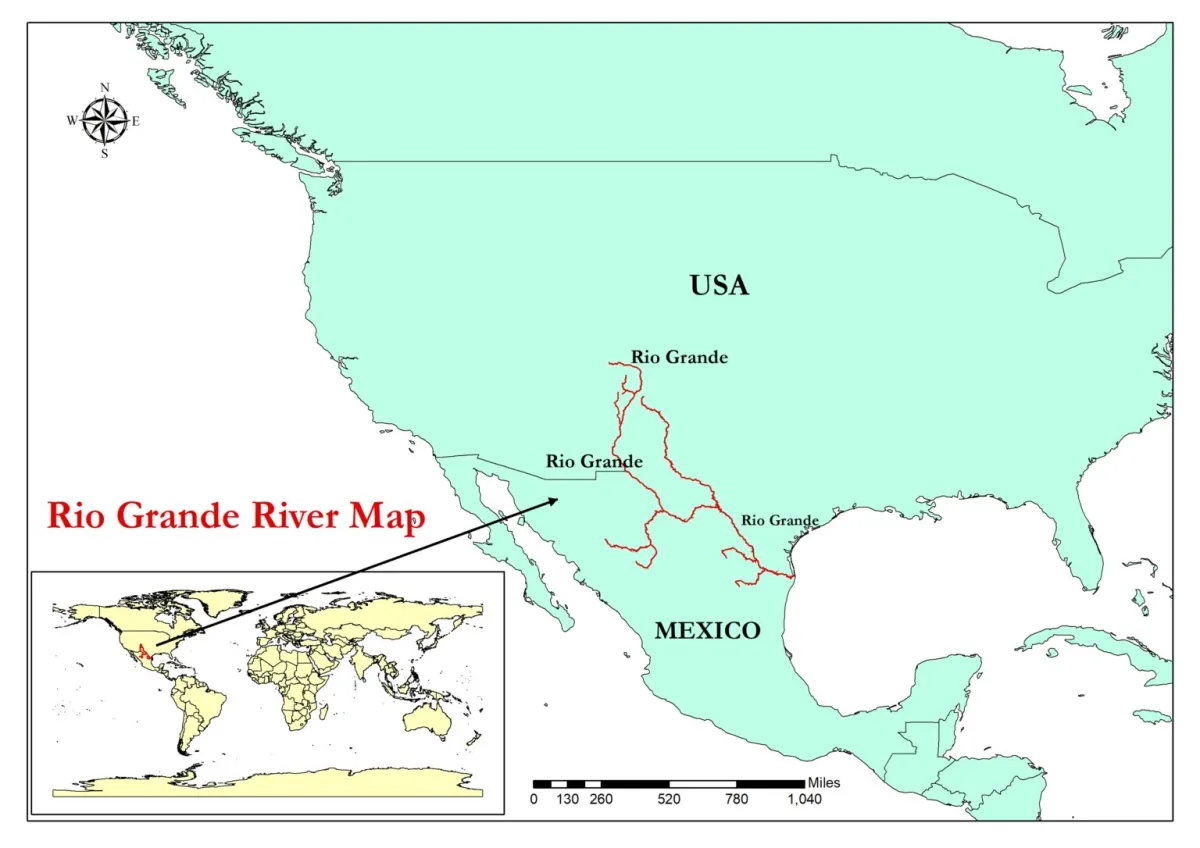 Photo: Rio Grande, via geogyan.in
Pueblo community members who participated in the consultation process brought oral histories that, in several instances, aligned with what the physical evidence suggested. That convergence — the archaeological record and the living memory of descendant communities pointing at the same story — is exactly the kind of thing that makes Southwestern archaeology distinctive.
The plumber, for his part, finished the pipe repair. He has given exactly one on-record interview about the experience, in which he noted that he has fixed pipes all over the Albuquerque area for twenty years and that this was, in his words, "not a typical job."
Somewhere beneath the asphalt and the utility lines and the subdivision streets of modern New Mexico, a thousand-year-old city is still waiting to be fully understood. The work order that found it cost a homeowner a few hundred dollars. What it uncovered is priceless.