The Accidental Spymaster: How an Iowa Grocer Unknowingly Ran a Cold War Safe House for Ten Years
Photo: Arthur Tress, Public domain, via Wikimedia Commons
The Most Boring Tenants in American History
Norman Hatch was not the kind of man who attracted drama. He ran a grocery store in a small Iowa town, knew most of his customers by name, and kept his back warehouse stocked with surplus canned goods and a broken chest freezer he always meant to fix. So when two well-dressed men knocked on his rear delivery door in the early 1970s and asked if he had storage space to rent, Norman figured it was his lucky day.
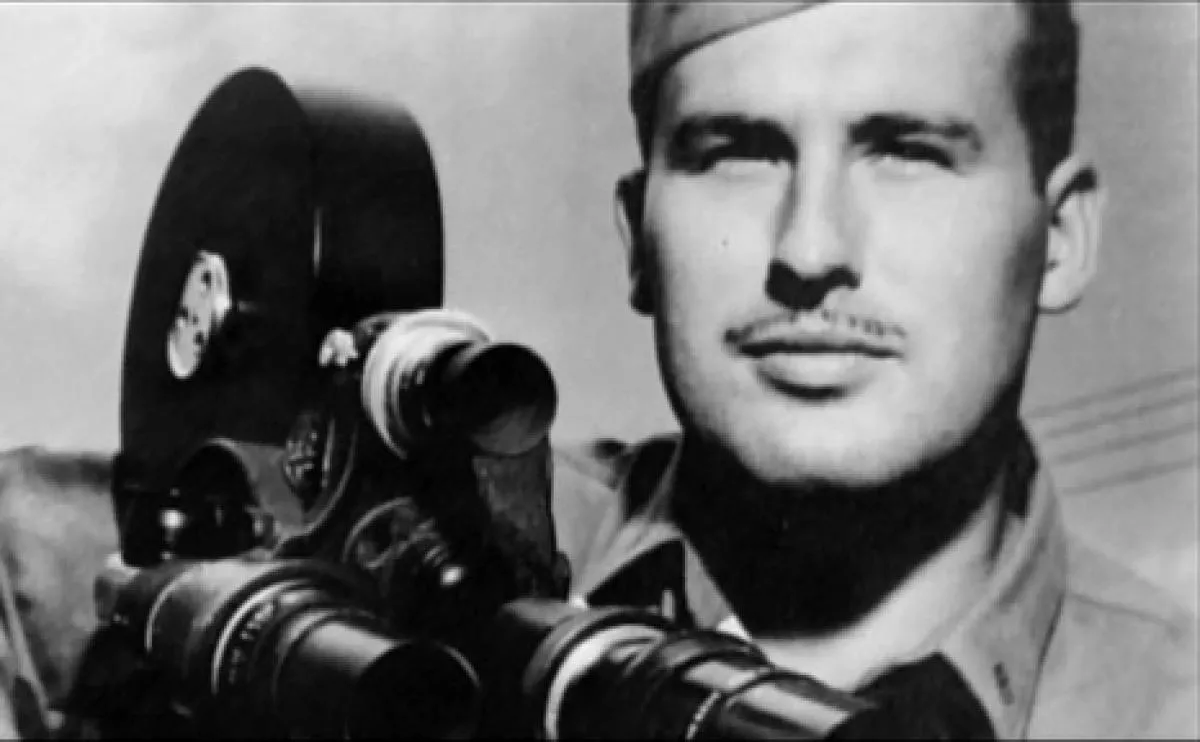 Photo: Norman Hatch, via www.usni.org
They paid in cash. They paid on time. They never complained about the leaky roof. For a landlord, they were basically perfect.
What Norman did not know — what he would not know for nearly a decade — was that those men worked for the Central Intelligence Agency, and his dusty warehouse had quietly become one of the most useful pieces of real estate in the American Midwest.
 Photo: Central Intelligence Agency, via c8.alamy.com
A Doctrine of Deliberate Ignorance
The Cold War was, among many other things, a masterclass in strategic ambiguity. The CIA, the FBI, and a constellation of federal agencies spent the 1960s and 1970s building what intelligence historians now call a "civilian infrastructure" — a network of ordinary American businesses, buildings, and individuals that could be used for sensitive operations without attracting attention.
The genius of the approach was its simplicity. A warehouse in Iowa looked exactly like a warehouse in Iowa. The men who came and went looked like insurance adjusters or traveling salesmen. Nobody was lying, exactly. They just weren't telling the whole truth, either.
Norman's arrangement fit this template almost perfectly. The men told him they worked for a federal contracting firm that handled classified paperwork. They needed a secure, low-profile space for document storage. They asked him not to enter the back section without calling ahead. Norman, who was busy running a grocery store and raising three kids, thought that sounded completely reasonable.
"He was the ideal tenant situation," one former intelligence official told a journalist decades later, without confirming or denying any specific location. "Trustworthy. Incurious. Busy."
What Was Actually Going On Back There
Declassified documents and investigative reporting from the 1990s pieced together a picture of what Cold War-era safe houses like Norman's actually contained. Depending on the operation, a rented civilian space might house encrypted communications equipment, staging materials for agent handoffs, or simply a secure mailing address that couldn't be traced back to a federal building.
In Norman's case, the most concrete evidence of anything unusual was the fire.
In 1981, something in the back section of the warehouse caught fire. It was minor — contained quickly, minimal structural damage — but it destroyed what the tenants described to Norman as "a typewriter." When Norman filed an insurance claim for damage to the building, he listed the cause of the fire as "electrical fault, tenant equipment." His insurance company, doing what insurance companies do, started asking questions.
What kind of equipment? What was the tenant's business exactly? Could they provide documentation?
Norman called the number on the lease agreement. The number had been disconnected.
The Phone Call That Changed Everything
Norman did what any reasonable Midwesterner would do: he drove to the county assessor's office, looked up the contracting company on the lease, and found that it didn't exist in any business registry he could locate. He then called his congressman's office, explained the situation, and waited.
Two weeks later, a man in a suit — a different suit, a different man — appeared at Norman's store and explained, in the most general possible terms, that the federal government appreciated his cooperation over the years, that the matter was considered closed, that the insurance claim would be handled, and that he was not to discuss the arrangement with anyone.
Norman reportedly looked at the man for a long moment and said, "I just want to know if my building is safe."
The man assured him it was.
Norman went back to stocking shelves.
The Absurdity Hidden in Plain Sight
What makes this story genuinely remarkable isn't the espionage — it's the collision between the enormous machinery of American Cold War intelligence and the completely ordinary rhythms of small-town life. Norman wasn't recruited. He wasn't vetted. He was just a guy with extra square footage and a reasonable rental rate.
And yet, for ten years, the back of his grocery warehouse hummed along as a functioning node in a federal intelligence network. Agents came and went. Equipment was installed and removed. Documents — or whatever they actually were — moved through that space without Norman ever once suspecting that his most reliable tenants might be running operations that appeared in classified briefings.
The insurance claim, when it was finally settled, listed the cause of loss as "miscellaneous electrical." The payout was modest. Norman used it to fix the leaky roof.
America's Accidental Spies
Norman's story is unusual in its specifics but not entirely unique in its structure. Historians who study Cold War domestic operations have documented dozens of cases where ordinary Americans — motel owners, warehouse operators, small-business landlords — unknowingly provided infrastructure for intelligence activities. Most never found out. Some, like Norman, stumbled into the truth sideways, through an insurance form or a disconnected phone number.
The federal government has never formally acknowledged the specific arrangement in Iowa. The documents that might confirm the details remain classified or were destroyed in the kind of routine bureaucratic housekeeping that tends to happen when an operation wraps up.
What we're left with is a story that sounds almost too perfectly American to be real: a grocer, a warehouse, a broken typewriter, and a decade of deliberate ignorance that somehow kept the whole thing running without a hitch.
Norman Hatch passed away in 2003. His family says he rarely talked about it. When he did, he mostly seemed bemused.
"He said they were the best tenants he ever had," his daughter told a local newspaper years later. "Always paid on time."