One Bad Tooth: The Dental Emergency That May Have Cost the Confederacy the Civil War
Photo: Edited by T.S. Arthur and Miss Virginia F. Townsend with no credit to individual illustrators, Public domain, via Wikimedia Commons
The Most Embarrassing Footnote in Military History
Picture this: two massive armies are maneuvering across the Tennessee countryside, each side convinced the next engagement could break the war wide open. Generals on both sides are making calculations, moving troops, reading terrain. And one of the Confederacy's key commanders? He's in a dentist's chair, gripping the armrests.
It sounds like the setup to a bad joke. But military historians have spent years untangling the thread of what happened when General Leonidas Polk — Episcopal bishop, plantation owner, and one of the Confederacy's most senior officers — was sidelined by a raging toothache at a pivotal moment in the western theater of the Civil War. What they found is one of those stories where the absurdity of everyday human biology crashed directly into the machinery of history.
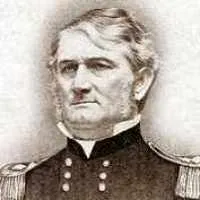 Photo: General Leonidas Polk, via tree-portraits-pgp.familysearchcdn.org
A General With a Very Bad Jaw
By the fall of 1862, the war in the western theater was grinding toward a series of confrontations that would determine whether the Confederacy could hold its grip on Kentucky and Tennessee. Polk, commanding a corps under General Braxton Bragg during the Kentucky Campaign, was a man whose military reputation rested more on his rank and connections than his battlefield genius — a fact his peers noted, sometimes charitably, sometimes not.
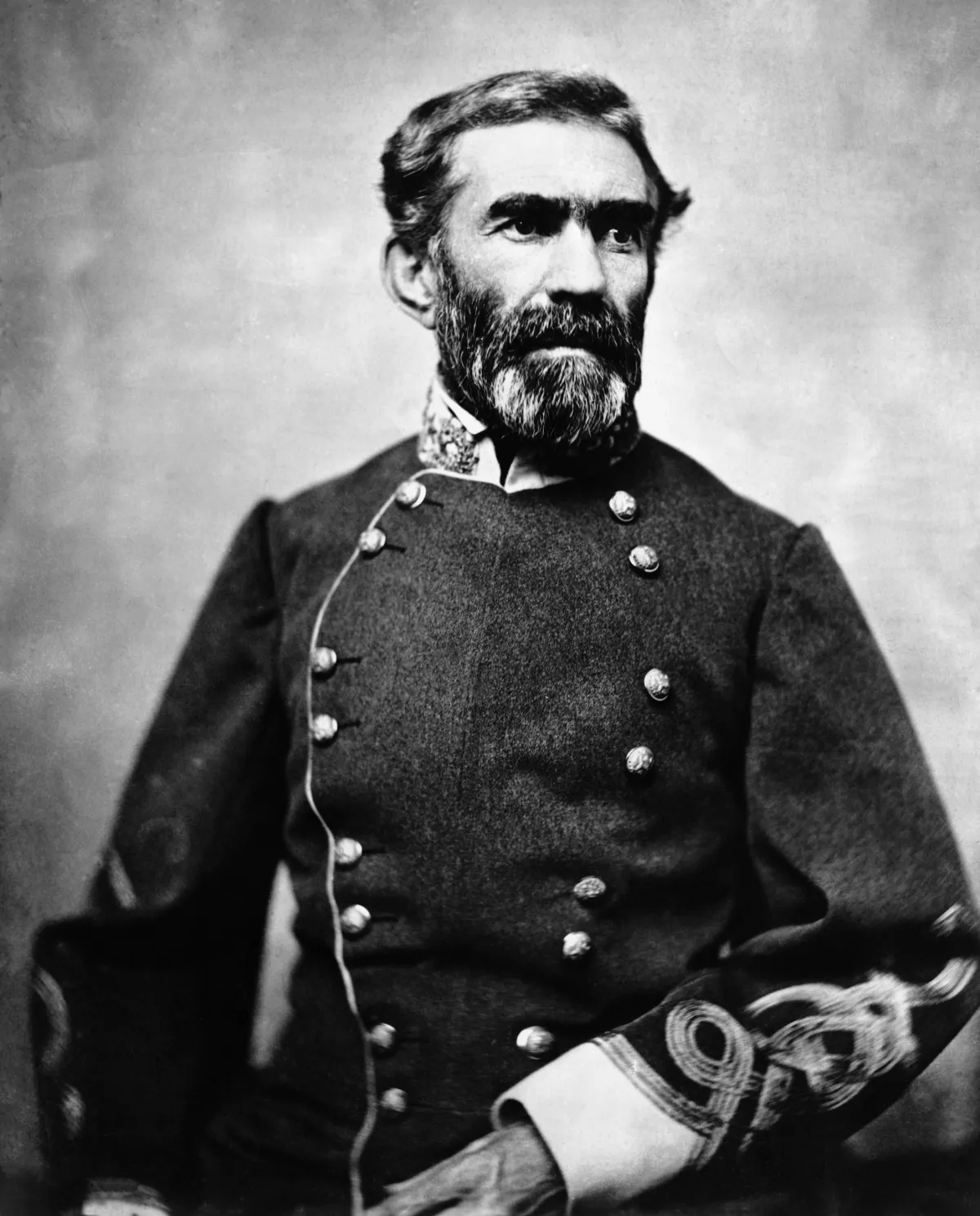 Photo: General Braxton Bragg, via cdn.history.com
What the historical record shows is that Polk suffered from severe dental problems during this period, a condition that was not unusual in an era before modern dentistry made routine care accessible. Tooth infections in the 1860s were not minor inconveniences. They were genuinely dangerous, capable of spreading to the jaw, the throat, and beyond. Officers on both sides of the conflict lost time — and occasionally their lives — to dental crises that today would be resolved in a single afternoon appointment.
At the Battle of Perryville on October 8, 1862, Polk's corps was central to Confederate strategy. Bragg's plan depended on coordinated movement. What actually happened was something closer to organized confusion, with Polk's performance during the engagement drawing sharp criticism from Bragg and subsequent historians alike. The coordination that Bragg expected never fully materialized, and while the reasons were multiple and complex, Polk's compromised physical state — documented in correspondence from the period — is part of the picture.
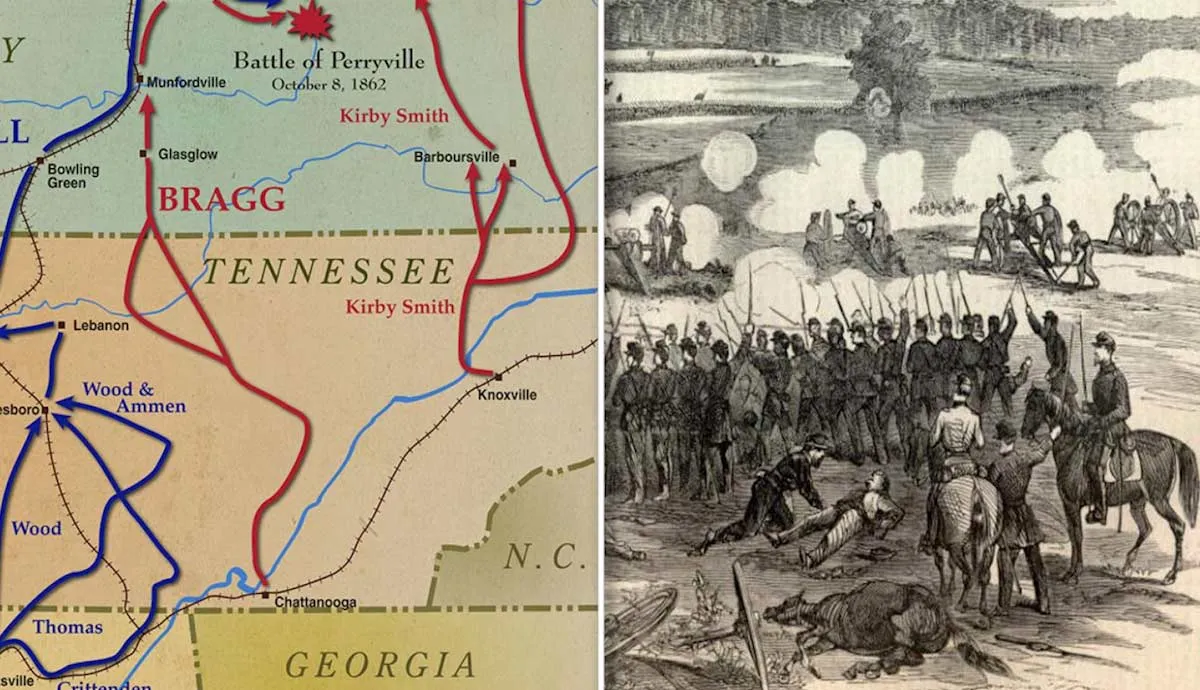 Photo: Battle of Perryville, via cdn.thecollector.com
The Union forces, under General Don Carlos Buell, held the field. The Confederate army withdrew from Kentucky entirely. It was a turning point that helped seal the fate of Confederate ambitions in the region.
Why a Toothache Actually Mattered
Here's the part that makes this story genuinely strange rather than just unfortunate: the margin was razor thin.
Perryville was one of the bloodiest single-day battles in the western theater, with roughly 7,600 casualties combined. The Confederate forces actually inflicted more damage than they received on the day itself — and yet they retreated. Military analysts have long argued that with better coordination, the Confederate position in Kentucky might have been sustainable. A different outcome at Perryville might have forced Buell into a defensive posture, buying the Confederacy precious time and territory.
Polk's failure to coordinate effectively — whether due to chronic tension with Bragg, genuine tactical confusion, or the kind of foggy decision-making that comes with a man running a fever from an infected tooth — contributed to that failure. The historical record doesn't hand us a single clean cause and effect. But it does hand us a remarkable collision of the mundane and the monumental.
A man had a toothache. He may not have been fully present. An army retreated. A war tilted.
The Bigger Pattern Nobody Likes to Talk About
Military historians have a complicated relationship with stories like this one. On one hand, the discipline demands rigor — you can't just blame a tooth for losing a campaign. On the other hand, the evidence that biological and physical factors shaped Civil War outcomes is overwhelming and often underreported.
General Stonewall Jackson was almost certainly suffering from severe fatigue during the Seven Days Battles in 1862, producing a performance so unlike his usual brilliance that historians still debate what happened to him. Ulysses Grant fought through debilitating migraines. Disease, exhaustion, and physical breakdown were constant companions to leadership on both sides.
What makes Polk's toothache stand out is the specific, traceable absurdity of it. This wasn't a grand strategic miscalculation or a failure of nerve under fire. It was a man's jaw rebelling at the worst possible moment in American history.
The Dentist Who Never Knew
There's no record of whoever treated Polk's teeth during this period pausing to think: I may be holding the war in my hands right now. That's the detail that lodges in the brain. Somewhere in the Confederate-controlled South, a dentist was doing what dentists do — probing, pulling, packing — entirely unaware that his patient's absence from a battlefield might be nudging the arc of a nation.
Polk himself survived Perryville, survived the Kentucky Campaign's aftermath, and continued serving until June 1864, when he was killed by Union artillery fire near Marietta, Georgia. He never wrote extensively about his physical condition during the fall of 1862.
But the records exist. The timing exists. And the outcome — a Union hold on Kentucky that helped strangle Confederate supply lines and morale in the west — exists.
History is often taught as a series of grand decisions made by clear-eyed leaders in decisive moments. The reality is messier, weirder, and considerably more human. Sometimes the thing that changes everything is a throbbing molar that just won't quit.