Built Wrong, Stood Longer: The Bridge That Embarrassed a Century of Engineering
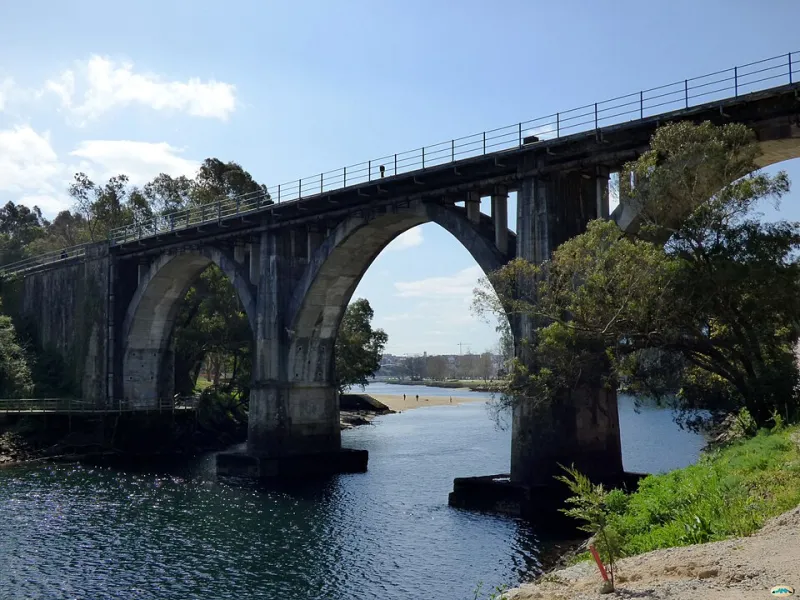
Photo: juantiagues, CC BY-SA 2.0, via Wikimedia Commons
The Demolition That Became a Discovery
Demolition jobs are supposed to be straightforward. You assess the structure, you plan the sequence, you bring it down. What you don't expect is to stop midway through and call a structural engineer to explain why the math doesn't add up.
But that's more or less what happened in rural Tennessee in the 1990s, when a crew began breaking down a Civil War-era railroad bridge that had quietly served its purpose for more than a century. The bridge was old, it was out of service, and it needed to come down. Standard stuff.
Except when engineers examined the original construction records — the old drawings, the load tables, the span calculations — they found something that made no sense. The builder had gotten the numbers wrong. Significantly, demonstrably, almost laughably wrong. And the bridge, by every accepted formula of the era, should have failed within ten years of opening.
It had lasted 130.
A Bridge Built at the Edge of Everything
To understand what happened, you need to picture what frontier-era construction actually looked like in the post-Civil War American South. There were no engineering schools producing standardized graduates. There were no federal safety codes. There were barely adequate surveying tools. What there were, in abundance, were practical builders — men who had learned their trade through experience, through apprenticeship, through watching things hold or watching things fall.
The man responsible for this particular bridge was, by contemporary accounts, a capable and respected local builder. He was not a formally trained engineer. He used load calculation tables that had circulated through the regional construction trade — tables that, historians later determined, were based on a misprint or transcription error from an earlier technical manual.
The error wasn't subtle. His calculations for how much weight the main span could safely bear were off by a factor that would have horrified any engineering professor. According to the numbers he was working from, he built his support members too thick, his cross-bracing too dense, and his anchor points more deeply embedded than the design actually required.
He thought he was building exactly to spec. He was, in fact, building something significantly stronger than spec.
What "Wrong" Actually Looked Like
The specific nature of the miscalculation is worth understanding, because it's not a case of random luck.
The erroneous tables the builder used overstated the load requirements for the bridge's primary span. Believing he needed to support more weight than the bridge would ever actually carry, he used heavier timber, more connection points, and a more redundant cross-bracing pattern than the correct calculations would have called for.
In structural engineering terms, this created what's called an exceptionally high safety factor — essentially, a massive built-in buffer between what the bridge could handle and what it was actually asked to handle. While a correctly built bridge of that era might have been designed with a safety factor of around 1.5 to 2 (meaning it could bear one-and-a-half to twice its intended load before failing), this bridge, due to the error, was operating with a safety factor closer to 4 or 5.
When the engineers examining the demolition records ran the actual numbers, the conclusion was uncomfortable: had the builder used the correct calculations, the bridge likely would have been built lighter, leaner, and more efficient — and it probably would have failed sometime in the 1880s or 1890s, decades before it actually came down.
The mistake didn't just fail to hurt the bridge. The mistake was the bridge.
The Quiet Conversation It Started
This kind of finding doesn't make headlines in the way that, say, a bridge collapse does. It circulated instead through engineering and structural history circles — through conference papers, through case studies in construction history courses, through the kind of quiet professional conversation that happens when something challenges a comfortable assumption.
The assumption it challenged was this: that in engineering, correct is always better than incorrect, and that optimization — building exactly as strong as you need to be, no more — is always the right goal.
The Tennessee bridge suggested something more complicated. It raised the question of what happens when the margin for error in a calculation is itself a structural feature. When the builder's mistake created redundancy that no correct calculation would have included, was the mistake actually the superior design choice?
Some engineers found this deeply unsettling. Others found it clarifying — a real-world argument for building in more redundancy than the math strictly demands, precisely because the math can be wrong.
Doing It Wrong, Getting It Right
There's a version of this story that's just funny — a frontier builder botches his numbers and accidentally makes something great. And it is funny, in the way that most good engineering stories are funny once nobody got hurt.
But the deeper version is genuinely interesting. It's about the difference between a system that's optimized and a system that's resilient. An optimized bridge is built to exactly meet its requirements. A resilient bridge is built with enough excess capacity that when conditions change — when loads get heavier, when materials age, when the unexpected happens — it doesn't fail.
The Tennessee builder didn't intend to build a resilient bridge. He thought he was building an optimized one. His error pushed him past optimization into resilience, and the bridge rewarded him by standing for 130 years.
The Unsettling Takeaway
When the bridge finally came down in the 1990s, it wasn't because it had failed. It came down because it was no longer needed — because the rail line it served had been decommissioned and the structure had outlived its purpose.
It did not collapse. It did not crack. It did not give any indication, right up until the demolition crew showed up, that it had spent more than a century quietly disproving its own blueprints.
Somewhere in a Tennessee field, there's nothing left of it now. But the conversation it started — about error, redundancy, and the uncomfortable possibility that getting it wrong sometimes produces something better than getting it right — that part is still standing.