He Thought He Was Just Fixing Typewriters. The CIA Had Other Ideas.
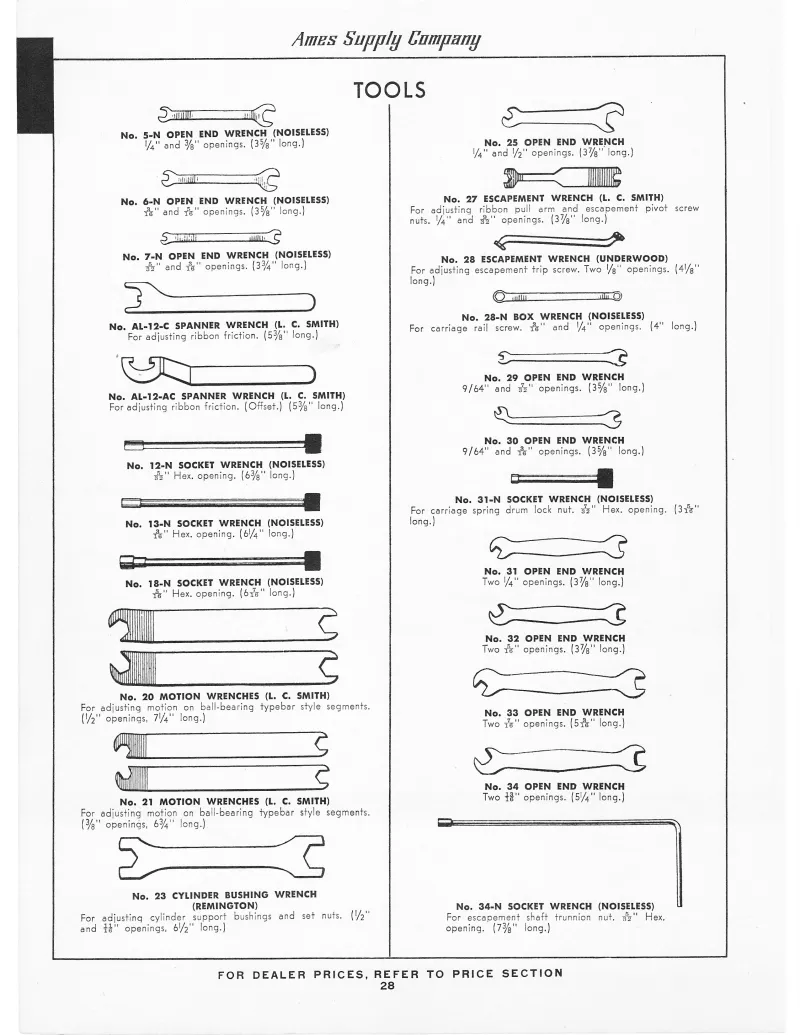
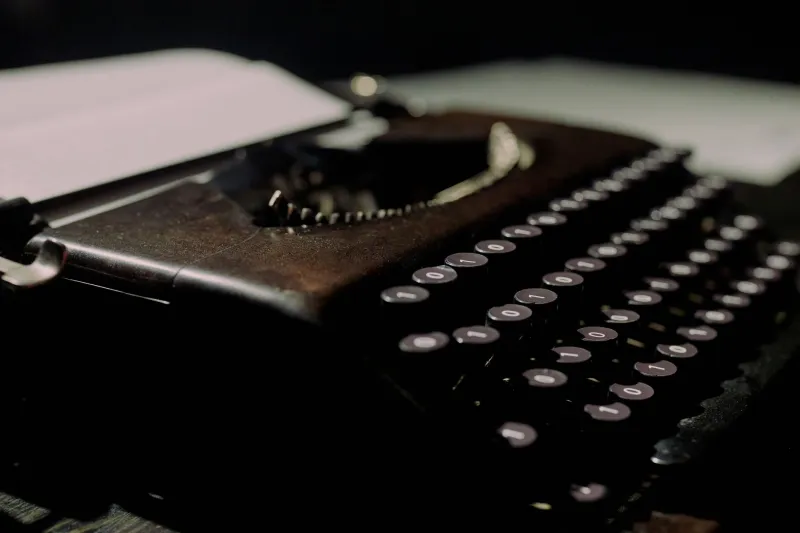
Photo: vintage typewriter repair shop mechanic tools 1960s, via typecast.munk.org
The shop had a screen door that stuck in humid weather and a hand-painted sign that had been fading since the Eisenhower administration. Inside, shelves of ribbon cartridges and spare key mechanisms lined the walls. The smell was machine oil and old rubber. The work was quiet, precise, and — as far as anyone who brought their machine in could tell — entirely unremarkable.
For nearly fifteen years, a repair technician in a mid-sized American town fixed typewriters for a living. He was good at it. He was fast, reliable, and cheap. He asked few questions and kept good records. Businesses, law firms, a local newspaper, and a rotating cast of private clients trusted him with their machines.
Among those clients, it turned out, were several individuals whose professional lives were considerably more complicated than their cover stories suggested. And the machines they brought in — for what appeared to be ordinary maintenance — were at the center of a classified intelligence program that the technician wouldn't learn about for another three decades.
The Cold War's Dependence on Paper
To understand how a typewriter repair shop in middle America ended up adjacent to Cold War espionage, it helps to understand how dependent intelligence operations of that era were on physical documents.
Before digital encryption, before secure email, before any of the communication infrastructure we now take for granted, intelligence agencies on both sides of the Iron Curtain ran on paper. Messages were typed, coded, physically carried, and physically stored. The typewriter wasn't just office equipment — it was a critical piece of operational infrastructure.
And typewriters, being mechanical devices with dozens of moving parts, broke down constantly.
The CIA's operational security manuals from the Cold War era — many of which have since been declassified through Freedom of Information Act requests — reveal a surprisingly pragmatic approach to equipment maintenance. Agents operating under cover in American cities were generally instructed to use local civilian services for routine equipment repair rather than routing machines through official channels, which could attract attention. The logic was sound: a CIA officer bringing a typewriter to Langley for maintenance was a security risk. A cover identity dropping a machine off at a local shop was just a person with a broken typewriter.
The result, in at least several documented cases, was that civilian repair technicians ended up handling machines that had been used to type classified communications, operational reports, and in some cases, coded correspondence.
What the Technician Knew — and Didn't
The man at the center of this particular story — identified in declassified documents only by a partial name and a city — ran his shop from the mid-1960s through the late 1970s. He was, by all accounts, a methodical professional who documented his work carefully and maintained a loyal customer base.
Among his regulars were several clients he knew only by first name or by a business name that, in retrospect, appears to have been a front. They paid in cash, which was not unusual for the era. They were polite and undemanding. They brought in high-end machines — German and Swiss models favored by professional users — for cleaning, alignment, and occasional key replacement.
The technician later told interviewers that he had noticed, on occasion, that some machines came in with unusual wear patterns. Keys that had been used far more heavily than others. Alignment issues consistent with machines that had been transported frequently rather than kept on a desk. He filed these observations away as professional curiosity and moved on.
He did not suspect espionage. Why would he? The machines looked like typewriters. The customers looked like customers. The work looked like work.
The File With His Name In It
The revelation came in the late 1990s, when a batch of CIA operational records from the 1960s and 70s was partially declassified as part of a broader government transparency initiative. A researcher working through the documents — a historian specializing in Cold War domestic operations — found a reference to a civilian repair facility that had been used as an inadvertent service node for field equipment.
The file didn't identify the technician as a knowing participant. Quite the opposite. The language was careful and bureaucratic, noting that the individual had provided "incidental maintenance services" to operatives operating under commercial cover and had demonstrated "no awareness of the classified context of the equipment serviced."
In other words: he had no idea. And the CIA had counted on exactly that.
The historian tracked him down. By then he was in his seventies, long retired, living in the same town where he'd run his shop. The conversation, which the historian later described in an academic paper, lasted most of an afternoon.
The technician's initial reaction was disbelief. Then amusement. Then something more complicated — a kind of retroactive vertigo, the sensation of watching a familiar landscape suddenly reveal a hidden geography.
"I kept thinking about specific jobs," he told the historian. "Specific machines. Wondering which ones."
The Blurry Line Between Ordinary and Extraordinary
What makes this story worth sitting with is not the espionage itself — Cold War intelligence history is full of more dramatic and consequential operations. What makes it strange is the texture of ordinary life that surrounded it.
The technician went home every evening to dinner and television. He coached his son's Little League team. He had a regular table at a diner two blocks from the shop. His life was, by every visible measure, entirely normal.
And somewhere inside that normal life, classified machinery passed through his hands. History moved through his shop, invisibly, on its way to somewhere else.
The CIA files suggest his shop was not unique — that similar arrangements existed in other cities, other trades, other unremarkable storefronts. Watchmakers. Radio repair technicians. Printing shops. Ordinary people doing ordinary work, occasionally handling the infrastructure of extraordinary events without ever being told.
The technician, when asked how he felt about the whole thing, reportedly thought for a long moment before answering.
"I just wish they'd told me," he said. "I would have done a better job."
Given the machines he was working with, that seems unlikely. But it's the kind of thing only a very good repairman would say.