The Surgeon Reached for the Wrong Organs. The Patient Lived Because of It.
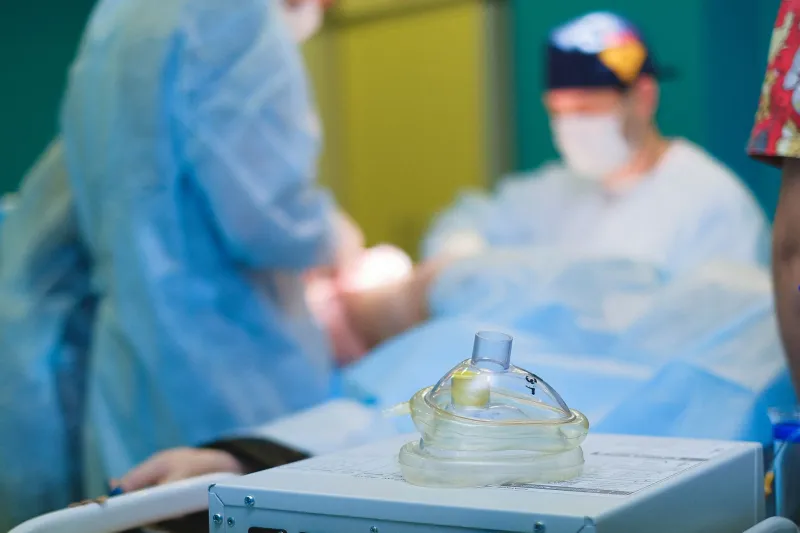
The Moment the Room Went Quiet
It happened about 40 minutes into the procedure.
The surgical team at a regional transplant center in the mid-South was well into what was supposed to be a standard kidney transplant — the kind of operation their unit performed dozens of times each year. The patient, a 54-year-old man who had been on dialysis for nearly three years, had been matched through the national organ procurement system to a donor whose blood type and tissue markers appeared compatible. The paperwork had been reviewed. The pre-operative protocols had been followed. Everything was in order.
Then a nurse cross-referencing the donor documentation against the physical transport records noticed a discrepancy in the identification numbers.
The organs on the table were not the ones assigned to this patient.
The room, by multiple accounts, went very quiet for a moment.
How Transplant Matching Works — and Why It's So Precise
To understand why this was alarming, it helps to understand what goes into matching a donor organ to a recipient in the first place. It is not a simple process.
The most basic requirement is ABO blood type compatibility — the same system used in blood transfusions. But kidney transplants also require close examination of human leukocyte antigens, or HLA markers, which are proteins on the surface of cells that the immune system uses to distinguish between "self" and "foreign." A poor HLA match means the recipient's immune system is more likely to recognize the new organ as an invader and mount a rejection response — a potentially fatal complication that transplant teams spend enormous effort trying to prevent.
Patients on the national waiting list are matched to donors through the United Network for Organ Sharing, known as UNOS, which scores compatibility across multiple biological dimensions. The closer the match, the better the long-term prognosis. Recipients with highly compatible donors can sometimes reduce their immunosuppressant medication over time. Those with poorer matches may require heavier drug regimens for life, with all the associated health risks.
When the team discovered the mismatch, the immediate concern was obvious: were these organs safe to use at all?
The Call That Changed the Outcome
The lead transplant surgeon halted the procedure and convened an urgent review. The organs were from a different donor — one whose records were located within minutes in the procurement system. The patient's immunologist was reached by phone. The HLA data for both the intended donor and the actual donor were pulled and compared side by side.
What the comparison showed was unexpected.
The actual donor — the one whose organs were on the table — was not the patient's assigned match. But on three of the six major HLA loci used in transplant compatibility scoring, the actual donor was a closer match than the intended one. The blood types were compatible. Two of the markers that most commonly drive acute rejection responses showed a tighter alignment with the patient's profile than the original pairing had.
In transplant medicine, a six-antigen match is considered ideal and is relatively rare. A three-antigen match is considered workable. The intended donor had offered a two-antigen match. The donor whose organs were actually present offered a four-antigen match.
The surgical team, after consultation with the hospital's ethics board and with the patient's family — who had been informed of the situation and consented to continue — proceeded with the transplant.
What Happened to the Patient
The patient's post-operative course was, by the attending physicians' accounts, remarkably smooth. His body showed minimal early signs of rejection. His immunosuppressant protocol was less aggressive than initially planned. By the six-month follow-up, his kidney function had stabilized at levels that placed him in the upper range of outcomes for his demographic and medical history.
His transplant team published a case report in a peer-reviewed medical journal — with identifying details removed — describing the circumstances and the outcome. The report was careful not to suggest that administrative errors in organ procurement were anything other than serious risks to be prevented. But it noted, with appropriate scientific caution, that the accidental substitution had resulted in a biologically superior match for this particular patient.
The report also acknowledged what nobody in transplant medicine was entirely comfortable saying out loud: the system's matching algorithms, while sophisticated, operate on probabilities. The best available match in the database is not always the best possible match in the world. It is the best match among the options the system knows about at the moment a decision has to be made.
The Fragility Hidden Inside the Process
Stories like this one tend to make medical professionals uncomfortable, and for good reason. The last thing any hospital wants is for patients to walk away thinking that organ procurement errors might sometimes work out fine. They don't, as a rule. The circumstances that made this outcome possible were specific, unlikely, and not reproducible by intention.
But the story does illuminate something genuinely strange about the nature of biological compatibility — and about the gap between the precision we expect from medicine and the messiness that biology actually operates in.
Human immune systems are extraordinarily complex. The variables involved in predicting whether a body will accept or reject foreign tissue are numerous enough that even the most sophisticated matching systems are working with incomplete information. The UNOS algorithm is, by any reasonable standard, a remarkable scientific achievement. It has saved tens of thousands of lives. It is also, inevitably, an approximation.
The patient in this case was lucky. The error that should have made things worse happened to make things better, in ways that couldn't have been predicted and almost certainly couldn't be replicated.
That's not an argument for accepting errors. It's a reminder that biology doesn't always read the protocol.
And sometimes — very rarely, under circumstances nobody would ever deliberately engineer — the thing that goes wrong is exactly what needed to happen.