She Almost Threw It Out. The Scribbles in the Margins Changed Everything We Thought We Knew About Shakespeare.
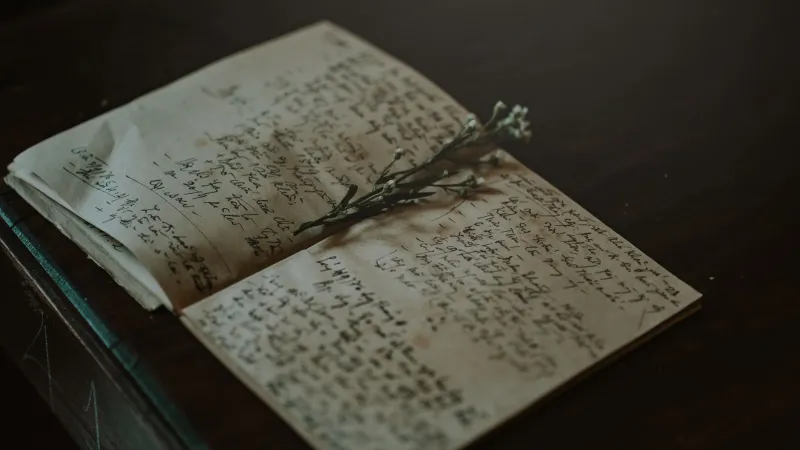
Most attics are graveyards for other people's decisions. Old furniture, forgotten photographs, boxes of things that seemed too important to throw away and not important enough to keep anywhere useful. When a retired schoolteacher in rural England began sorting through the contents of her late mother's attic a few years ago, she expected dust and nostalgia. What she found instead set off a quiet earthquake in the world of literary scholarship.
The book was old. That much was obvious. The leather cover was cracked and dark, the pages brittle at the edges, the typeface blocky in that unmistakable way of early printing presses. She almost set it aside for the donation pile. Then she noticed the date on the title page.
What a First Folio Actually Means
If you're not deep in the world of rare books, the significance of that date might not immediately land. Here's the short version: the First Folio is the first collected edition of William Shakespeare's plays, published seven years after his death. Without it, roughly half of Shakespeare's work — including Macbeth, The Tempest, and Julius Caesar — would likely have been lost entirely. The plays existed only as performance scripts, and performance scripts had a way of disappearing.
Only about 235 copies of the First Folio are known to survive today, scattered across libraries and private collections worldwide. When one surfaces outside of an institutional setting, it's an event. When one surfaces in a cardboard box next to a broken lamp and some 1970s paperbacks, it becomes the kind of story that makes book people need to sit down.
The woman contacted a local antiques dealer, who contacted an appraiser, who contacted a rare books specialist at a major London auction house. Within weeks, a team of scholars had descended on the property with cotton gloves and portable ultraviolet lights.
The book was authenticated. It was, without question, a genuine 1623 First Folio in remarkably stable condition. Estimated value: somewhere between $3 million and $5 million, depending on condition assessment and provenance.
That would have been enough of a story. But then the scholars started reading the margins.
The Notes Nobody Was Supposed to See
Marginalia — the notes readers leave in the edges of books — has a long and surprisingly rich history as a scholarly resource. People in the 16th and 17th centuries wrote in their books constantly, and those annotations can reveal how texts were read, taught, performed, and understood at the time they were published.
This particular copy was covered in them.
The handwriting appeared in at least two distinct hands, both consistent with early 17th-century script. Some of the notes were straightforward: corrections to obvious printing errors, stage directions that differed from the published text, alternative line readings. But others were something else entirely.
Several annotations referenced specific performances — not in general terms, but with the kind of granular detail that suggested firsthand experience. One note beside a scene in Othello appeared to describe a staging choice that contradicted the published text, using phrasing that implied the annotator had seen the play performed differently. Another, beside a passage in The Winter's Tale, included a name that scholars recognized: Richard Burbage, the lead actor of Shakespeare's company, who died in 1619, four years before the Folio was printed.
The implication was significant. If the annotations were authentic, at least one of the people who wrote in this book had direct knowledge of how these plays were performed during Shakespeare's lifetime — possibly during Shakespeare's own involvement with his theater company, the King's Men.
What the Experts Said (and Didn't Say)
Scholars were careful, as scholars tend to be. Nobody claimed outright that Shakespeare himself had touched the book — the Folio wasn't printed until after his death, which makes that physically impossible. But the suggestion that the annotations came from someone inside the theatrical world of early 17th-century London, someone with access to performance knowledge that never made it into print, was taken seriously.
Handwriting analysis, ink composition testing, and paper dating were all conducted. The results were consistent with the annotations having been made within a few decades of the Folio's publication — placing the annotator well within the living memory of Shakespeare's working life.
For scholars who spend their careers trying to reconstruct how these plays were actually staged — as opposed to how we've interpreted them on the page for four centuries — the find was extraordinary. Several of the variant stage directions, if authentic, would challenge long-held assumptions about specific scenes. At least one annotation suggested a character interpretation that modern directors have been debating for decades, and appeared to settle the question in a direction most had not expected.
The Thing About Almost
What keeps this story lodged in the imagination isn't just the discovery itself — it's the proximity to loss.
The woman who found the book has said publicly that she came within about ten minutes of putting it in a bag for the charity shop. The box it was in had been sitting in that attic for at least thirty years, possibly longer. Her mother had apparently inherited it from her own mother, who may have acquired it as part of a lot purchase at an estate sale sometime in the mid-20th century. Nobody in the family had any idea what they had.
The marginalia — the notes that may reshape our understanding of how Elizabethan theater actually worked — almost ended up in a secondhand bookshop somewhere in the English countryside, priced at a few pounds, waiting for someone who might or might not have noticed the date.
That's the thing about history. It doesn't always announce itself. Sometimes it just sits in a cardboard box and waits to see if you're paying attention.