He Went in for a Gallbladder. He Came Out Speaking Russian.
Surgery comes with a standard list of risks that anesthesiologists walk you through before you go under. Infection. Bleeding. Adverse reaction to medication. Temporary disorientation upon waking. What is not on the standard consent form, because it is so vanishingly rare that including it would seem almost cruel, is this: you might wake up fluent in a foreign language.
And yet.
The patient — a man in his mid-forties from the Midwest, whose name has been kept out of published case materials at his request — checked into a regional hospital for a laparoscopic cholecystectomy. Gallbladder removal. One of the most routine procedures in American surgery, performed hundreds of thousands of times a year. He was in the operating room for less than two hours. He had no known neurological conditions, no history of strokes or brain injuries, and no significant exposure to Russian or any Slavic language.
When he came out of anesthesia, the first thing the recovery nurse noticed was that he wasn't making sense. Not in the way that post-anesthesia patients sometimes ramble — but in the way that someone might not make sense if they were speaking a completely different language.
He was speaking Russian.
The First Hours
The nursing staff initially assumed some kind of anesthesia confusion. Patients wake up disoriented all the time, saying things that don't track. But the man was lucid in every other respect — he knew his name, knew where he was, could answer yes-or-no questions with appropriate nods. He just kept producing what sounded like coherent speech in a language nobody in the recovery room recognized.
A hospital interpreter was eventually reached by phone. The interpreter, a native Russian speaker, listened to a recorded clip and confirmed: the man was speaking Russian. Grammatically structured Russian. Not random syllables, not phonetic mimicry — actual sentences.
The man himself was distressed and confused. He reported that he could hear and understand the English being spoken around him, but that when he tried to speak, Russian came out first, almost involuntarily, before he could consciously redirect himself. Over the following hours, his English began returning in fragments, but for several days the Russian remained dominant, surfacing especially when he was tired or stressed.
Neurologists were called. A case file was opened. And a very unusual investigation began.
What the Brain Scans Showed
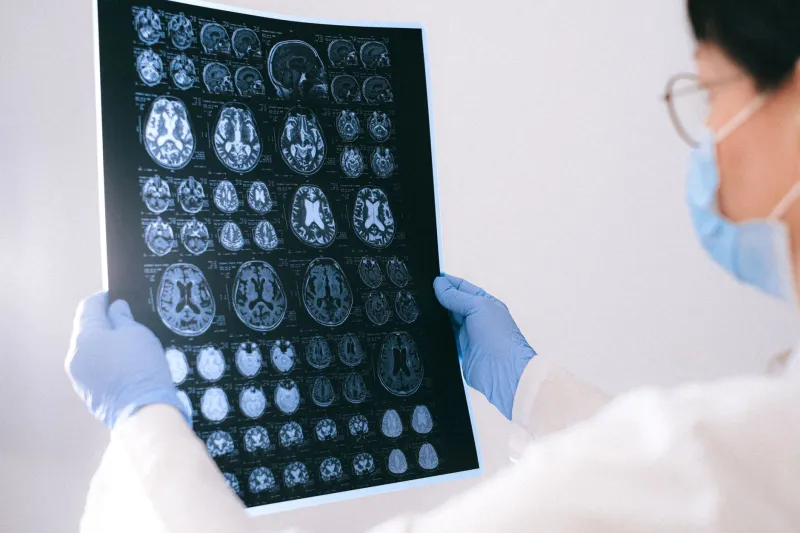
The medical team's first priority was ruling out surgical complications — a small stroke, an embolism, any kind of vascular event that could have occurred during the procedure. Imaging showed nothing dramatic. No visible lesions, no hemorrhage, no obvious structural damage.
What the scans did show — subtly, in functional MRI conducted over the following weeks — was altered activation patterns in the language centers of the brain, particularly in the left temporal lobe and Broca's area, the region associated with speech production. The patterns weren't consistent with damage. They looked more like a rerouting — as if pathways that had previously been dormant or suppressed were suddenly active.
This finding placed the case within a small but genuinely documented category of neurological phenomena known as acquired savant syndrome — a condition in which a brain injury, illness, or in rare cases a surgical event appears to unlock cognitive abilities that were not previously accessible. Cases have included people who developed extraordinary mathematical abilities after strokes, individuals who began producing detailed visual art after head injuries with no prior artistic training, and at least one documented instance of a person gaining perfect pitch after a lightning strike.
The Russian case was unusual even within this unusual category, because the ability in question was linguistic — and language acquisition is generally understood to require years of immersive exposure. You don't simply download a language. Except, apparently, sometimes something in the brain suggests otherwise.
The Exposure Question
The obvious question — where did the Russian come from? — turned out to be harder to answer than expected.
The man had no Russian heritage, had never visited Russia or any Russian-speaking country, and had never formally studied the language. But a detailed interview process, conducted with neuropsychologists over several months, began to surface fragments of possible exposure.
As a child, he had lived briefly in a neighborhood with a significant Russian immigrant population. He recalled hearing the language spoken around him but had no conscious memory of learning any of it. In his twenties, he had worked briefly in a warehouse alongside several Russian-speaking coworkers and reported picking up a handful of words, though he'd never considered himself remotely conversational.
The prevailing hypothesis among the neurologists who published a summary of the case: the brain had absorbed far more linguistic input than the conscious mind had registered. That information had been encoded somewhere — not in the accessible, retrievable way of learned knowledge, but in a passive, buried form. The surgical event, and possibly the specific neurological disruption caused by the anesthesia protocol used, had somehow lowered the barrier between that stored data and active speech production.
In simpler terms: the language may have always been in there. Something just turned a key.
What It Means (and What It Doesn't)
Neurologists are cautious about overstating this case. Acquired savant syndrome remains poorly understood, and the mechanisms behind it are genuinely not clear. The Russian-speaking patient's case doesn't prove that every brain is secretly a multilingual archive waiting to be unlocked — that would be a significant overreach.
What it does suggest is that the brain's capacity for passive language absorption may be substantially greater than we typically assume, and that under certain conditions — conditions we don't yet fully understand — that absorbed material can become accessible in ways that bypass normal learning entirely.
The man eventually regained full, fluent English and now describes his Russian as faded but present — like a radio station he can occasionally pick up if the conditions are right. He has not pursued formal Russian study, though neurologists have encouraged him to do so, partly out of scientific curiosity and partly because they suspect structured practice might stabilize the ability rather than let it drift.
He went in for a gallbladder. He came out with a second language and a file in a neuroscience journal.
The gallbladder, for the record, is gone. The Russian, apparently, is staying.