The Man Who Recorded Tomorrow: How a Deaf Inventor Beat Edison by Accident
The Vibration Detective
In the pantheon of American inventors, Thomas Edison holds the crown for recording the first human voice, immortalizing "Mary Had a Little Lamb" on his phonograph in 1877. But hidden in a musty courthouse basement in rural Tennessee lay evidence of a discovery that would rewrite the history books—if anyone had bothered to look thirty years earlier.
Jacob Whitmore was not the kind of man you'd expect to revolutionize technology. Born deaf in 1823 in the small town of Murfreesboro, Tennessee, Whitmore made his living as a mechanic and tinkerer, fixing everything from pocket watches to farm equipment. But his disability had given him an unusual obsession: vibrations.
 Photo: Jacob Whitmore, via yt3.googleusercontent.com
What Whitmore couldn't hear, he could feel. And in the earthquake-prone region of central Tennessee, he became convinced he could build a machine to predict seismic activity by detecting the subtle vibrations that preceded major tremors.
The Accidental Breakthrough
Whitmore's "Earth Tremor Detection Apparatus," as he formally called it, was an ingenious contraption that would have impressed even Edison. A series of precisely calibrated springs and levers amplified tiny ground vibrations, transferring them to a needle that scratched patterns onto a rotating cylinder coated with a mixture of beeswax and lampblack.
The device was designed to run continuously, creating a permanent record of seismic activity that Whitmore hoped would reveal patterns preceding earthquakes. What he didn't realize was that his sensitive apparatus was picking up far more than ground tremors.
On March 15, 1847, Whitmore was testing his latest refinements when his nephew, 12-year-old Samuel, burst into the workshop to announce that dinner was ready. Unknown to either of them, Samuel's excited shout—"Uncle Jake, Ma says come eat!"—created vibrations that traveled through the wooden floor, up through Whitmore's detection apparatus, and onto the wax cylinder.
Whitmore, focused on calibrating his springs, noticed that the needle had made an unusually complex pattern during the boy's visit. But since he was looking for earthquake precursors, not human voices, he simply noted the anomaly in his journal and moved on.
The Patent That Time Forgot
What happened next reveals both Whitmore's genius and the tragic irony of his story. Convinced that his vibration detector could have commercial applications beyond earthquake prediction, he filed for a patent with the U.S. Patent Office on April 2, 1847.
Patent #5,094, titled "Apparatus for Recording Mechanical Vibrations," described in meticulous detail a device that could "capture and preserve upon a prepared surface the exact nature and duration of vibrational disturbances." The patent application included detailed drawings and even mentioned the potential for "preserving human speech patterns for scientific study."
The patent was approved on September 14, 1847, making Jacob Whitmore the legal inventor of sound recording technology—thirty years before Edison's phonograph.
But there was a problem: Whitmore had no idea what he'd actually accomplished.
The Discovery in the Basement
Whitmore's story might have remained buried forever if not for a routine courthouse renovation in 1994. Workers clearing out the basement storage area of the Rutherford County Courthouse discovered dozens of boxes containing 19th-century legal documents, including Whitmore's complete patent file and his personal workshop journals.
 Photo: Rutherford County Courthouse, via royalstockphoto.s3.amazonaws.com
Among the papers was something extraordinary: the original wax cylinder from March 15, 1847, carefully preserved in a wooden box along with Whitmore's notes describing the "unusual pattern" it contained.
Dr. Michael Harrison, an audio restoration specialist from Vanderbilt University, was called in to examine the cylinder. Using modern digital enhancement technology, Harrison was able to extract from the 147-year-old wax a faint but unmistakable recording of young Samuel's voice: "Uncle Jake, Ma says come eat!"
"It was absolutely incredible," Dr. Harrison later told the Nashville Tennessean. "Here was a clear recording of human speech from 1847, captured completely by accident by a man who had no idea he'd just revolutionized human communication."
The Legal Battle That Shook History
The discovery triggered one of the most unusual patent disputes in American legal history. Whitmore's great-great-grandson, attorney Robert Whitmore, filed a lawsuit claiming that his ancestor's 1847 patent invalidated Edison's later claims to inventing sound recording.
The case, Whitmore v. Edison Estate, became a sensation in legal and scientific circles. Edison's defenders argued that Whitmore's device was intended for earthquake detection, not sound recording, and that the voice capture was purely accidental. Whitmore's legal team countered that intent was irrelevant—the patent clearly described technology capable of recording sound, and the physical evidence proved it worked.
The dispute revealed fascinating details about both inventors. Court documents showed that Edison had actually visited Tennessee in 1876, just one year before his famous phonograph demonstration. While there's no evidence he knew about Whitmore's work, the timing raised eyebrows among patent historians.
The Tragic Irony
Perhaps the most heartbreaking aspect of Whitmore's story is how close he came to understanding his breakthrough. His workshop journals, discovered alongside the patent documents, show that he continued to notice "voice-like patterns" in his vibration recordings throughout the late 1840s.
On several occasions, he noted that the patterns seemed to correspond with human activity in his workshop. But as a deaf man in an era before sign language was widely understood, Whitmore had no way to connect these visual patterns with the sounds that created them.
In one particularly poignant journal entry from 1851, Whitmore wrote: "The needle makes such beautiful, complex patterns when people visit the workshop. I wonder if there is some connection between human presence and these recordings that I have yet to understand."
He died in 1863, sixteen years before Edison's phonograph, never knowing that he had solved one of the greatest technological challenges of his age.
The Modern Verdict
The legal battle over Whitmore's patent was eventually settled out of court in 1998, with the Edison Estate acknowledging Whitmore as a "significant predecessor" in sound recording technology. While Edison retained credit for the first intentional recording of human speech, Whitmore was officially recognized as the first person to successfully capture and preserve a human voice.
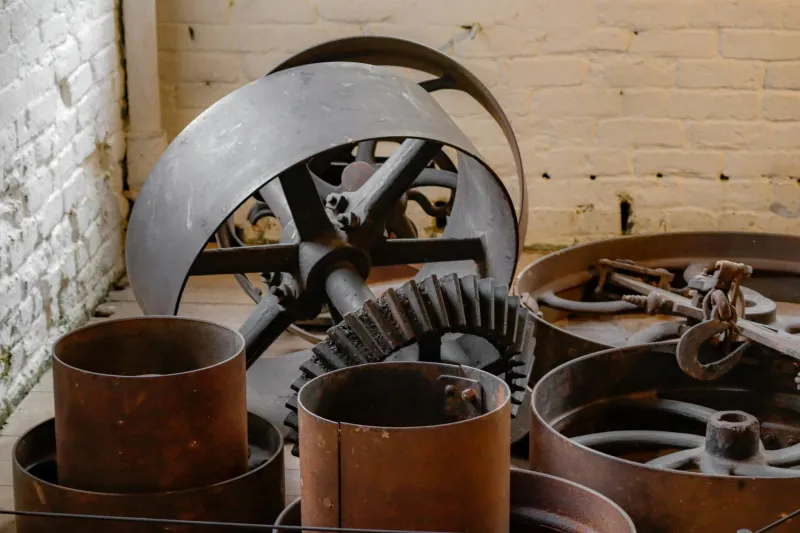
Today, the Rutherford County Historical Society displays Whitmore's original apparatus alongside the famous wax cylinder. The exhibit includes a digital playback of Samuel's 147-year-old dinner announcement, now recognized as the oldest recorded human voice in existence.
Dr. Harrison, who led the restoration effort, reflects on the broader implications: "Jacob Whitmore's story reminds us that breakthrough discoveries don't always happen in famous laboratories by celebrated inventors. Sometimes the most important advances come from ordinary people asking extraordinary questions—even if they don't realize the answers they've found."
In the end, Jacob Whitmore's greatest invention wasn't his earthquake detector—it was accidentally proving that history's most important discoveries often happen when we're looking for something else entirely.