They Were Just Turning Dials in Their Basements. What They Picked Up Changed What We Knew About Government Secrets.
The Signal That Didn't Belong
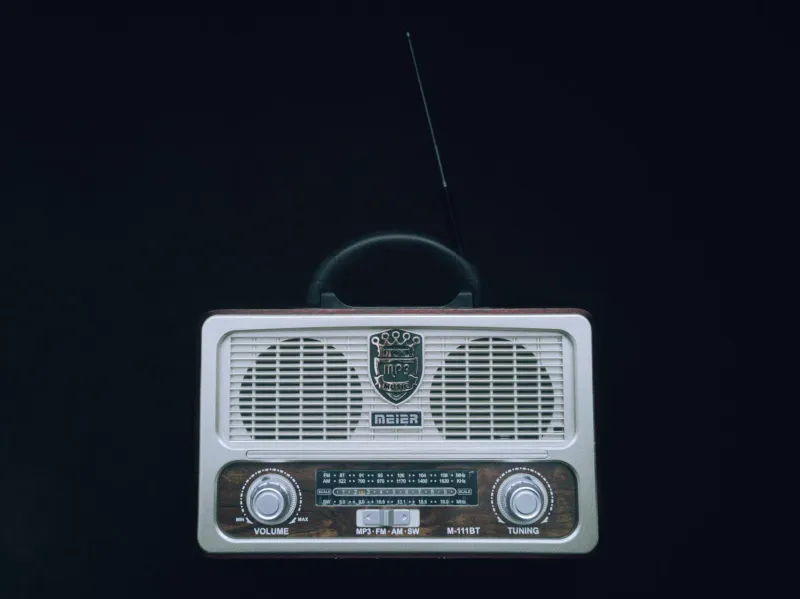
Picture a guy in suburban Ohio, sometime around 1983, sitting in his basement in front of a rack of secondhand radio equipment. It's late. The kids are in bed. He's scanning frequencies the way other people flip through TV channels — not looking for anything in particular, just listening to the invisible river of electromagnetic noise that flows through the air at all hours.
And then he hears it.
A repeating sequence of tones. Mechanical. Deliberate. Structured in a way that doesn't match any commercial broadcast, any weather station, any emergency band he's ever heard before. He writes it down. He listens again the next night. The same tones, the same rhythm, the same frequency — a frequency that, according to every official chart he owns, isn't assigned to anyone.
He wasn't the only one.
Numbers, Tones, and the Frequencies That Weren't Supposed to Be There
By the mid-1980s, a loose network of amateur radio enthusiasts — mostly middle-aged men with engineering backgrounds, military veterans who'd worked in signals, and curious hobbyists who'd built their own receivers — had been quietly cataloguing a phenomenon that the mainstream communications world was pretending didn't exist.
They called them "utility stations" or, more colloquially, "spook stations." Some transmitted strings of numbers read by robotic or human voices. Others broadcast coded tone sequences. A few transmitted what sounded like encrypted data bursts — short, sharp, and gone before you could properly lock onto them.
The frequencies were real. The signals were real. But officially, they were nobody's.
This wasn't entirely new territory. So-called "numbers stations" — shortwave broadcasts used to transmit coded messages to intelligence agents in the field — had been documented since World War II. Hobbyists had been picking up those for years, and the government's consistent response was some variation of "we don't know what you're talking about."
But what this particular group of 1980s listeners was finding was different. These weren't just numbers stations. Some of the signals appeared to be navigation aids — transmitters that were guiding something, or someone, to specific locations. Others seemed to be automated status pings from installations that weren't on any public map.
Following the Signal
A handful of dedicated hobbyists — equipped with nothing more sophisticated than directional antennas, frequency counters, and a lot of patience — began the painstaking process of trying to triangulate where the transmissions were originating.
This is a technique called radio direction finding, and it's not simple. You need multiple listening posts at different locations, precise timing, and the ability to cross-reference signal bearings on a map. But these were not casual dabblers. Several had backgrounds in military communications or electrical engineering. They knew what they were doing.
What they found, over months of coordinated listening sessions and map work, was unsettling in its specificity. Several of the mystery frequencies appeared to originate from locations that were either officially inactive military installations or sites that didn't appear to have any public-facing communications function at all. One cluster of signals seemed to emanate from a stretch of desert in Nevada that was, at the time, not on any declassified map of military facilities.
That particular patch of Nevada would later become somewhat famous. But in the early 1980s, it was just a blank space that was apparently transmitting.
What They Were Actually Hearing
The hobbyists never cracked the codes. That was never really the point. What they did was document, with remarkable precision, the existence of a communications infrastructure that the U.S. government had gone to considerable lengths to keep invisible.
Some of what they found almost certainly corresponded to the Air Force's then-classified Minimum Essential Emergency Communications Network — a system designed to maintain command-and-control capability during and after a nuclear exchange. Other signals were likely tied to the military's long-range navigation systems and the covert communication channels used by intelligence agencies to contact assets abroad.
The Cold War was, at its core, an infrastructure war. Both superpowers had built enormous, parallel systems of communication, surveillance, and control that existed entirely outside of public knowledge. The hobbyists weren't finding secrets so much as they were finding the seams — the places where that hidden infrastructure leaked into the electromagnetic spectrum and became, however briefly and incomprehensibly, audible.
The Government's Non-Answer
When some of the more persistent hobbyists began publishing their findings in amateur radio journals and early computer bulletin boards, the response from official channels was characteristically oblique. The FCC issued vague statements about interference investigations. The Department of Defense declined to comment. A few of the more specific frequency logs were quietly flagged, and at least one radio club reported receiving an informal visit from men who identified themselves as federal employees but declined to elaborate on which agency.
None of the hobbyists were prosecuted. Listening to a frequency is not, in itself, illegal — even if the transmitter on the other end would rather you didn't. And the government seemed to calculate, correctly, that responding seriously to a bunch of basement radio enthusiasts would create far more attention than ignoring them.
The Accidental Transparency of Radio Waves
What makes this story genuinely remarkable isn't the espionage angle, though that's compelling enough. It's the fundamental irony at the center of it: the most powerful government on earth, with virtually unlimited resources dedicated to secrecy, was undone — at least partially — by a handful of retirees with antenna wire and Radio Shack equipment.
Radio waves don't check clearance levels. They don't respect classification systems. They travel through walls, across borders, and into the basements of curious people with receivers and notebooks and time on their hands.
The men who sat up late in the 1980s listening to signals that weren't supposed to exist weren't spies or activists. They were hobbyists. They were just turning dials.
And that, it turns out, was enough.