The Suburban Rebellion That Created America's Tiniest Nation
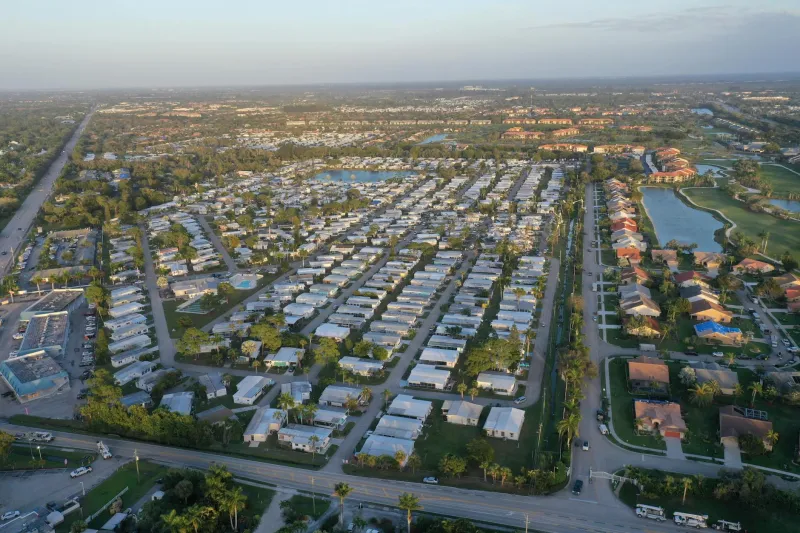
When Property Lines Became International Borders
Imagine waking up one morning to discover your suburban neighborhood had become a foreign country overnight. That's exactly what happened to residents of Johnstown Estates, Florida, in 1977, when a dispute over fence regulations escalated into one of the most bizarre sovereignty crises in American history.
It started, as many great rebellions do, with paperwork. The residents of this small community in Palm Beach County were fed up with what they saw as excessive government interference in their daily lives. County ordinances dictated everything from fence heights to mailbox colors, and the homeowners association felt like they were drowning in red tape.
But rather than simply complaining at town hall meetings like most frustrated suburbanites, the residents of Johnstown Estates decided to take a more dramatic approach. They hired a lawyer, researched constitutional law, and did something that sounds impossible: they legally seceded from the United States.
The Loophole That Shocked Legal Experts
The mastermind behind this suburban secession was attorney Ellis Rubin, who discovered what he claimed was a genuine constitutional loophole. Rubin argued that since the community had been incorporated without proper federal oversight, and because certain bureaucratic procedures hadn't been followed during the original land development process, Johnstown Estates technically existed in a legal gray area.
According to Rubin's interpretation, the community had never been properly "annexed" into the United States in the first place. Therefore, he reasoned, the residents had every right to declare themselves an independent nation.
On paper, it was absurd. In practice, it worked.
Local courts, apparently as confused as everyone else, initially ruled in favor of the community's declaration of independence. For a brief, shining moment, the Republic of Johnstown Estates became America's newest neighbor.
Life in the Republic of Johnstown Estates
What followed was perhaps the most polite revolution in world history. The newly independent nation immediately set about establishing all the trappings of sovereignty. They designed a flag, printed their own currency (which featured local landmarks and prominent residents), and began issuing official passports to citizens who wanted to travel to the "foreign country" of the United States.
The Republic even established diplomatic relations with its neighbors. Residents would present their Johnstown Estates passports when crossing the border into Palm Beach County, and local officials, unsure how to handle the situation, often played along.
Daily life in the Republic was remarkably similar to life in regular suburban America, with a few notable exceptions. Residents no longer had to follow county ordinances about fence heights or lawn maintenance. They established their own postal system (though they still relied on the U.S. Postal Service for actual mail delivery). Most importantly, they could build whatever kind of fences they wanted without asking anyone's permission.
The Bureaucratic Nightmare That Made It All Possible
The most remarkable aspect of this story isn't that a neighborhood declared independence—it's that nobody in state or federal government noticed for almost two years. The Republic of Johnstown Estates operated openly, with newspaper coverage and television interviews, yet somehow flew under the radar of every relevant government agency.
This wasn't a secret underground movement. The residents held press conferences, invited reporters to tour their "nation," and even sent formal diplomatic notes to the White House. But in the pre-internet era, information traveled slowly, and bureaucratic wheels turned even slower.
The situation became even more surreal when the IRS began investigating whether citizens of Johnstown Estates owed U.S. taxes. After all, if they were truly citizens of a foreign nation, their tax obligations would be completely different. The Treasury Department found itself in the bizarre position of trying to determine whether a Florida subdivision was actually a sovereign country.
When Reality Finally Caught Up
The Republic of Johnstown Estates might have continued indefinitely if not for a routine review by the Florida Department of State in 1979. A junior clerk, processing municipal incorporation documents, noticed something unusual about Johnstown Estates' paperwork and flagged it for review.
What followed was a cascade of legal challenges, appeals, and bureaucratic scrambling as state officials tried to figure out how to un-declare independence for a suburban neighborhood. The original court ruling was overturned, the constitutional loophole was closed, and the Republic of Johnstown Estates was officially reintegrated into the United States.
But for nearly two years, this small Florida community had achieved something that no other American neighborhood has managed before or since: they had successfully opted out of the United States over a fence dispute.
The Legacy of America's Shortest-Lived Republic
Today, Johnstown Estates looks like any other Florida suburb. The revolutionary fervor has died down, the homemade currency has become a collector's item, and residents once again must comply with county ordinances about fence heights.
But the story serves as a reminder of just how complex and sometimes contradictory American law can be. In a nation built on the principle that government derives its power from the consent of the governed, what happens when the governed decide to withdraw that consent? For one small Florida community, the answer was surprisingly simple: you declare independence, print some money, and hope nobody in Washington notices for a couple of years.
The Republic of Johnstown Estates may have been short-lived, but it proved that in America, even the most impossible dreams can sometimes come true—at least until the paperwork catches up.