When Road Repairs Revealed America Had Been Building on the Wrong Side of the Border
The Pothole That Broke International Law
Imagine calling your local public works department about a pothole, only to discover your entire neighborhood technically belongs to another country. That's exactly what happened to residents of Scenic, Arizona in 1977, when what should have been a simple road repair job turned into an international incident that would take nearly a decade to resolve.
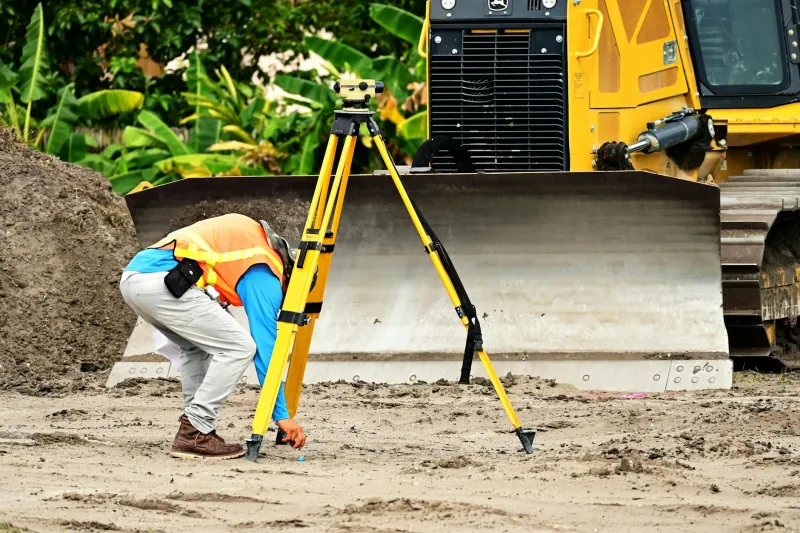
The trouble started when Arizona Department of Transportation crews arrived to fix deteriorating pavement along State Route 85. As part of standard procedure, they needed to verify property boundaries before beginning work. What they found defied belief: according to official surveying records, several residential blocks that everyone assumed were safely within American territory were actually sitting about 300 feet inside Mexico.
When Maps Lie for Decades
Scenic, Arizona wasn't exactly a bustling metropolis. With fewer than 200 residents, this desert community near the Organ Pipe Cactus National Monument had always been a quiet place where people minded their own business. Most families had lived there for generations, paying American taxes, voting in American elections, and receiving mail through the U.S. Postal Service.
The surveying error traced back to imprecise boundary markers established in the early 1900s. When the original international border was demarcated between the United States and Mexico, surveyors relied on crude instruments and challenging desert terrain. Over the decades, as small communities grew up around these markers, nobody thought to double-check the measurements with modern equipment.
The affected area included about 40 homes, a small general store, and a section of the state highway itself. Residents had been unknowingly living as illegal immigrants in their own country for over 70 years.
Bureaucratic Chaos Across Two Nations
Once the surveying discrepancy became official knowledge, both governments found themselves in an unprecedented predicament. The affected residents were American citizens living on Mexican soil, but Mexico had never exercised jurisdiction over the area. Meanwhile, Arizona had been collecting property taxes and providing municipal services to people who technically lived in a foreign country.
Federal officials from both sides of the border descended on Scenic like it was a major diplomatic crisis. The State Department had to get involved, along with Mexican foreign ministry representatives, immigration officials, and a parade of lawyers trying to figure out who had authority over what.
Residents found themselves caught in legal limbo. Were their property deeds valid? Could they be arrested for illegal border crossing every time they drove to the grocery store? What about their children who attended American schools?
The Most Polite International Incident Ever
What made the situation even more surreal was how civilized everyone remained throughout the ordeal. Mexican officials had no interest in suddenly acquiring a chunk of Arizona desert populated by confused Americans. U.S. officials wanted to resolve the matter without setting precedents for other potential border disputes.
Meanwhile, Scenic residents went about their daily lives in a strange state of suspended nationality. They continued paying American taxes, though technically they weren't required to. The post office kept delivering mail, even though it was crossing international borders with each delivery. Children kept attending American schools, creating what was probably the world's most casual violation of international education treaties.
The Decade-Long Fix
Resolving the mess required extensive negotiations between Washington and Mexico City. Both governments had to agree to a formal border adjustment, which sounds simple but involves mountains of paperwork, congressional approval, and ratification by both national legislatures.
The solution came through a land swap. Mexico agreed to cede the accidentally-occupied territory to the United States in exchange for a comparable piece of uninhabited land elsewhere along the border. This required new surveys, environmental impact studies, and legal documentation that took years to complete.
Officials also had to retroactively legitimize decades of American governmental actions in the disputed area. Property deeds had to be revalidated, tax payments had to be legally recognized, and birth certificates had to be sorted out for children born in what was technically Mexico but recorded as American births.
The Aftermath of Accidental Secession
By 1985, nearly eight years after that fateful pothole repair, the border adjustment was finally official. Scenic, Arizona was legally American again, though it had never really stopped being American in any practical sense.
The incident prompted a comprehensive review of the entire U.S.-Mexico border, leading to the discovery of several other minor surveying discrepancies. None were as dramatic as Scenic's situation, but the government wasn't taking any more chances with century-old measurements.
Today, Scenic remains a quiet desert community, though locals still joke about the time their town accidentally seceded from America because of road work. The stretch of highway where it all began has been repaved multiple times since 1977, but residents sometimes wonder what other surprises might be lurking beneath the asphalt.
When Reality Refuses to Match the Paperwork
The Scenic incident perfectly illustrates how the modern world's obsession with precise documentation can collide spectacularly with messy historical reality. For decades, everyone involved—residents, officials, and both national governments—operated under assumptions that turned out to be completely wrong.
What started as a routine infrastructure project became a lesson in how easily bureaucratic reality can diverge from actual reality, and how much effort it takes to bring them back into alignment. Sometimes the most extraordinary stories begin with the most ordinary events, like a crew showing up to fix a pothole on a quiet desert road.