The Lobster Trap Victory: When 300 Maine Fishermen Accidentally Beat the U.S. Navy
Picture this: you wake up one morning to find warships anchored in your backyard, and uniformed sailors telling you that your family's fishing grounds are now off-limits indefinitely. For most people, that would be the end of the story. But the 300 residents of Swans Island, Maine weren't most people.
When the Navy Came Calling
In the spring of 1948, the U.S. Navy decided Frenchman Bay — the traditional fishing grounds surrounding Swans Island — would make an excellent testing site for new torpedo technology. Without consulting local authorities or even bothering to notify residents, naval vessels simply appeared one morning and began setting up operations.
The Navy's logic was straightforward: they needed deep, isolated waters for weapons testing, and this remote stretch of Maine coast seemed perfect. What they hadn't counted on was the island's fishing community, who had been working these waters for generations and had no intention of giving them up without a fight.
Commander Robert Hayes, the naval officer in charge of the operation, initially dismissed local complaints. After all, what could a handful of lobstermen possibly do against the might of the U.S. Navy?
The Accidental Declaration of War
The conflict escalated when islanders discovered that the Navy's testing schedule would coincide with peak lobster season — effectively destroying their entire economic livelihood for the year. Island selectman Ernest Sprague called an emergency town meeting, and what emerged was a plan so audacious it bordered on the absurd.
The islanders decided to formally "blockade" the Navy using their lobster boats.
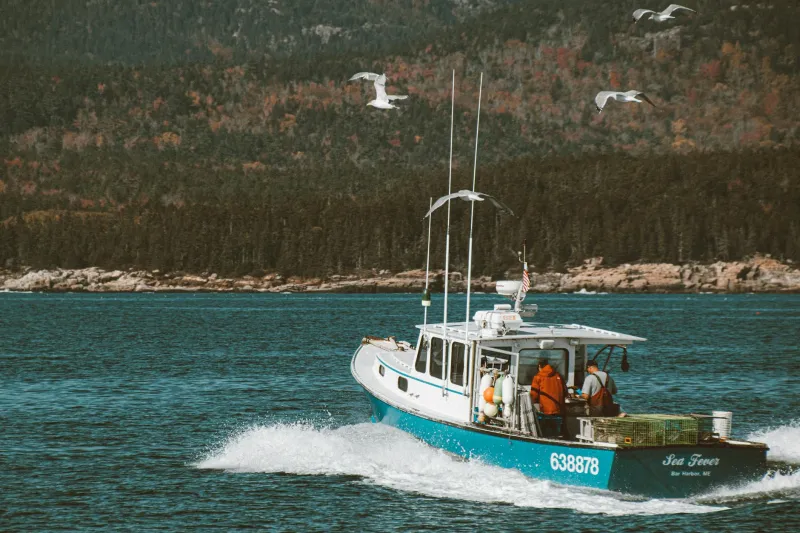
On June 15, 1948, nearly every seaworthy vessel on Swans Island — roughly 40 lobster boats, fishing skiffs, and even a few rowboats — formed a floating barrier around the Navy's test area. The fishermen dropped their traps directly in the path of naval operations and refused to move them.
When Commander Hayes radioed the Coast Guard for assistance in removing what he termed "civilian obstructions," he was told that the lobstermen were operating within their legal rights. The waters belonged to the state of Maine, not the federal government, and the Navy had never obtained proper permits for exclusive use.
David Meets Goliath (With Lobster Traps)
What followed was three weeks of the most polite standoff in military history. Navy personnel would approach the lobster boats to request they move, and the fishermen would politely decline, citing their state fishing licenses. The sailors couldn't forcibly remove civilian vessels without risking an international incident, and the lobstermen showed no signs of backing down.
The situation became even more surreal when islanders began inviting Navy personnel aboard their boats for coffee and homemade pie while explaining exactly why torpedo testing would devastate the local ecosystem. Several sailors reportedly became so charmed by the community that they began questioning the mission themselves.
Meanwhile, word of the standoff had reached Augusta, the state capital, where Governor Horace Hildreth was furious that federal authorities had bypassed state jurisdiction entirely. He dispatched the Maine Attorney General to investigate, setting up a legal battle that would ultimately prove more decisive than the floating blockade.
The Legal Torpedo That Sank the Navy's Plans
The state's investigation revealed that the Navy had committed a spectacular bureaucratic blunder. Federal law required environmental impact studies and state permits for any military operations in coastal waters — neither of which had been obtained. More embarrassingly, the Navy had never actually secured legal authority to commandeer the testing area in the first place.
Faced with potential lawsuits from both the state of Maine and individual fishermen, plus growing negative publicity from what newspapers had dubbed "The Great Lobster War," the Navy quietly announced on July 4th that they would relocate their testing operations to federal waters off Virginia.
The Unlikely Heroes of Frenchman Bay
The victory celebration on Swans Island lasted three days and became the stuff of local legend. The islanders had accomplished something that seemed impossible: they had forced the U.S. military to back down using nothing but determination, legal savvy, and strategically placed lobster traps.
Commander Hayes, in a final report that was classified for decades, admitted that the operation had been "terminated due to unforeseen civilian resistance and inadequate legal preparation." Translation: a bunch of fishermen had outsmarted the Navy.
The Lasting Legacy
The Swans Island incident became a landmark case in maritime law, establishing important precedents about federal versus state jurisdiction in coastal waters. More importantly, it demonstrated that ordinary Americans could still successfully challenge government overreach — even when that government came armed with torpedoes.
Today, Frenchman Bay remains prime lobster fishing territory, and every summer brings tourists eager to hear the story of how 300 islanders accidentally declared war on the U.S. Navy and won. The local museum displays photographs from the standoff, including one particularly memorable shot of a destroyer surrounded by lobster boats flying American flags.
As for the Navy? They learned a valuable lesson about the importance of paperwork — and never again underestimated the determination of New England fishermen protecting their livelihood.
The whole affair proves that sometimes the most powerful military in the world is no match for a community armed with nothing more than lobster traps and stubborn Yankee pride.