The Fake Gallery That Fooled Everyone: A Small Museum's Century of Counterfeits
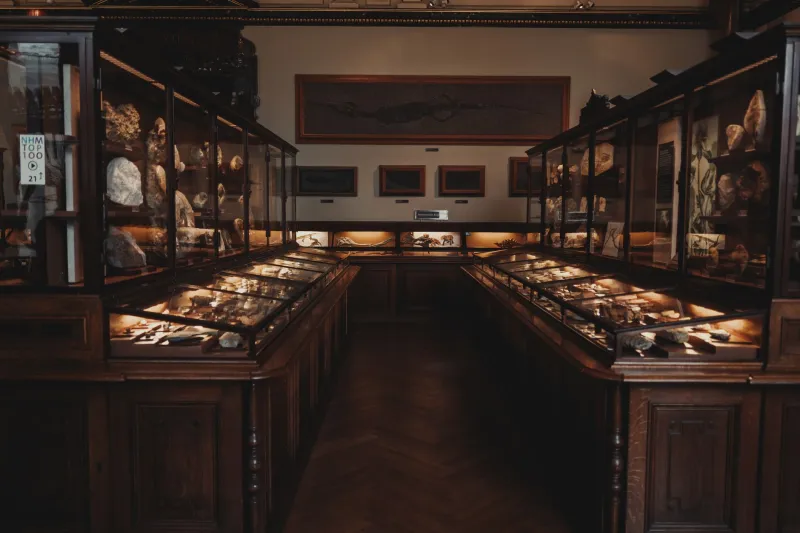
There's a particular kind of confidence that comes with standing in a museum. The lighting is dim and careful. The placards are typed in authoritative fonts. The cases are locked. Everything about the environment whispers: this is real, and we have verified it.
So imagine the particular horror — and, honestly, the dark comedy — of discovering that a museum's entire collection was built on a foundation of forgeries, misidentified relics, and enthusiastic reproductions passed off as the genuine article. For one small regional institution, that horror arrived not with a dramatic confrontation, but with a quiet inventory audit and a very uncomfortable phone call to a university authentication lab.
This is a story about how we decide what's real, who we trust to tell us, and why the answer is sometimes: nobody checked.
How a Collection Gets Built on Quicksand
Small regional museums in America have always operated on a particular kind of faith. Unlike the Smithsonian or the Metropolitan, they typically lack the budget for rigorous provenance research, the staff for ongoing authentication, or the institutional skepticism that comes with handling genuinely priceless objects every day. What they often have instead is enthusiasm — and a rotating cast of local donors who show up with boxes from their grandparents' attics, convinced they're holding history.
The museum at the center of this story — a regional history institution in the American Midwest — began accumulating its collection the same way dozens of others did: through bequests, estate sales, and the goodwill of community members who wanted their family heirlooms to mean something beyond a shelf in a spare bedroom. Over roughly sixty years, the collection grew to several hundred objects spanning approximately two centuries of regional and national history.
The problem, it turned out, was that almost none of it had ever been formally authenticated.
Curators had relied on donor testimony, handwritten notes tucked inside boxes, and the occasional glance from a visiting academic who wasn't specifically asked to look for problems. Objects were catalogued, labeled, and placed behind glass — and the act of display itself became a kind of authentication. If it was in the museum, it must be real.
The Audit That Opened a Very Awkward Door
The unraveling began not with a whistleblower or a suspicious visitor, but with a grant application. The museum had applied for a federal preservation grant that required a detailed inventory and condition assessment of the collection. A conservator brought in for the assessment started flagging items almost immediately.
A Revolutionary War-era musket showed manufacturing marks consistent with a mid-twentieth-century reproduction. A set of "original" pioneer tools had been produced by a company that didn't exist until 1931. Several pieces of Native American pottery, displayed with careful reverence and detailed cultural context, turned out to be tourist-market reproductions manufactured in bulk decades after the period they supposedly represented.
The deeper the conservator dug, the stranger it got. A framed letter supposedly signed by a prominent historical figure had paper composition inconsistent with the stated date. A collection of Civil War medical instruments — one of the museum's most popular exhibits — included at least three items that were theatrical props, traceable to a costume supply company that had sold them as decorative pieces in the 1970s.
By the time the assessment was complete, conservators had flagged roughly 70 percent of the collection as either confirmed reproductions, probable misidentifications, or objects with entirely unverifiable provenance.
Why Nobody Caught It Sooner
This is the part of the story that's genuinely fascinating — and a little unsettling. The museum hadn't been hiding anything. Curators weren't running a con. In most cases, they had genuinely believed the objects were authentic because the people who donated them had genuinely believed the same thing.
Psychologists who study authentication errors have a name for the mechanism at work here: provenance bias. When an object arrives with a compelling story — "this belonged to my great-great-grandmother, who crossed the plains in 1849" — our brains treat the narrative as evidence. The story feels like proof. And once an object is labeled and displayed, the institutional authority of the museum amplifies that feeling for every visitor who encounters it.
Expert visitors weren't immune either. When academics or collectors toured the collection, they were typically focused on the objects within their specific area of expertise. A Civil War historian examining the medical instruments wasn't necessarily looking for signs of theatrical prop manufacture. A general visitor certainly wasn't.
There's also the social dynamics of small institutions to consider. Questioning a donation — especially a prominent one from a well-regarded local family — carries real community costs. It's far easier to accept the story than to risk offending the donor network the museum depends on for its survival.
What Happened Next
The museum's response to the assessment was, by most accounts, admirably honest. Rather than quietly retiring the flagged objects, administrators chose transparency. They worked with local historians and the original donors' families to reconstruct the paper trail as best they could, identifying where stories had been embellished, misremembered, or simply invented over generations of retelling.
Some of the flagged objects turned out to be genuinely interesting in their own right — not as historical artifacts, but as artifacts of a different kind of history. The reproduction pottery, for instance, told a real story about the mid-century trade in Indigenous-styled decorative objects and the ways that trade had distorted public understanding of Native American material culture. The theatrical prop medical instruments revealed something about how the Civil War had been romanticized and commodified in the decades after it ended.
The museum eventually redesigned a portion of its galleries around this secondary narrative — the history of how history gets misremembered, embellished, and sold back to us as authentic. It became, somewhat unexpectedly, one of the more thought-provoking exhibits in the region.
The Bigger Picture
This story isn't unique. Authentication scandals have touched institutions of every size, from rural history societies to major metropolitan art museums. The Getty, the Met, and the Boston Museum of Fine Arts have all faced high-profile questions about objects acquired without adequate provenance research. The difference is usually scale, resources, and the amount of embarrassment involved.
What makes the small-museum version of this story so oddly compelling is its ordinariness. No one was trying to deceive anyone. The fakes accumulated the same way most things accumulate in American life — gradually, through good intentions, wishful thinking, and a general reluctance to ask uncomfortable questions.
The real artifact, it turns out, was the story we were telling ourselves all along.