The Night Everything Changed at Gardner Colton's Traveling Show
December 10, 1844, started as just another evening of entertainment in Hartford, Connecticut. Gardner Colton's traveling nitrous oxide exhibition had rolled into town, promising audiences a night of hilarious hijinks as volunteers inhaled "laughing gas" and stumbled around the stage in chemically-induced euphoria.
 Photo: Hartford, Connecticut, via c8.alamy.com
These shows were wildly popular across 19th-century America. For 25 cents, audiences could watch ordinary citizens transform into giggling, stumbling comedians under the influence of nitrous oxide. The gas was considered harmless fun—a party trick with no practical applications beyond entertainment.
But that night in Hartford, a single moment of accidental discovery would revolutionize medicine forever, transforming surgery from a barbaric ordeal into a painless procedure. All it took was one volunteer's unlucky stumble and one dentist's sharp observation.
When the Show Goes Wrong
Dr. Horace Wells, a 29-year-old Hartford dentist, had attended Colton's show out of curiosity. He watched as volunteers took turns inhaling the gas, becoming increasingly animated and ridiculous to the crowd's delight.
Then Samuel Cooley, a local store clerk, stepped forward for his turn with the gas bag. After several deep inhalations, Cooley began dancing and laughing uncontrollably. The audience roared with laughter as he stumbled around the stage, completely intoxicated by the nitrous oxide.
But Cooley's performance took an unexpected turn. In his gas-induced stupor, he crashed into a wooden bench, badly gashing his shin. Blood poured from the wound, staining his pants and the stage floor.
Here's where the story becomes medically revolutionary: Cooley didn't react to the injury at all. He continued laughing and dancing, completely oblivious to what should have been excruciating pain. The audience assumed it was part of the act, but Wells recognized something extraordinary was happening.
The Dentist's Eureka Moment
As Cooley's nitrous oxide high wore off, he suddenly noticed his bloody leg and cried out in pain. Wells approached him after the show, examining the wound and questioning Cooley about what he'd experienced.
Cooley confirmed Wells' suspicion: he had felt absolutely nothing when the injury occurred. The pain only began when the gas effects faded.
Wells' mind raced with the implications. As a dentist in the 1840s, he performed tooth extractions that were essentially controlled torture sessions. Patients had to be physically restrained while he yanked teeth from their heads with crude tools. Many people delayed necessary dental work for years, enduring infected teeth rather than facing the agony of extraction.
If nitrous oxide could eliminate pain completely, it could transform not just dentistry, but all of surgery.
The Self-Experiment
Wells couldn't sleep that night, consumed by the possibilities he'd witnessed. The next morning, he sought out Gardner Colton and convinced him to bring his nitrous oxide equipment to Wells' dental office.
What happened next demonstrates either remarkable scientific courage or complete recklessness: Wells decided to test his theory on himself. He had Colton administer the gas while a colleague, Dr. John Riggs, prepared to extract one of Wells' own molars.
As the nitrous oxide took effect, Wells felt the familiar euphoria wash over him. Riggs proceeded with the extraction—a procedure that should have been agonizing. Wells felt nothing.
When he regained full consciousness, the tooth was gone, and he had experienced no pain whatsoever. "A new era in tooth-pulling!" he reportedly exclaimed, holding up the extracted molar as proof.
The Road to Revolution
Wells immediately began using nitrous oxide in his practice, performing painless extractions that amazed his patients. Word spread quickly through Hartford—there was a dentist who could pull teeth without pain.
But Wells' discovery faced skepticism from the medical establishment. When he demonstrated his technique at Massachusetts General Hospital in 1845, the procedure failed spectacularly. The patient cried out in pain, and Wells was dismissed as a charlatan.
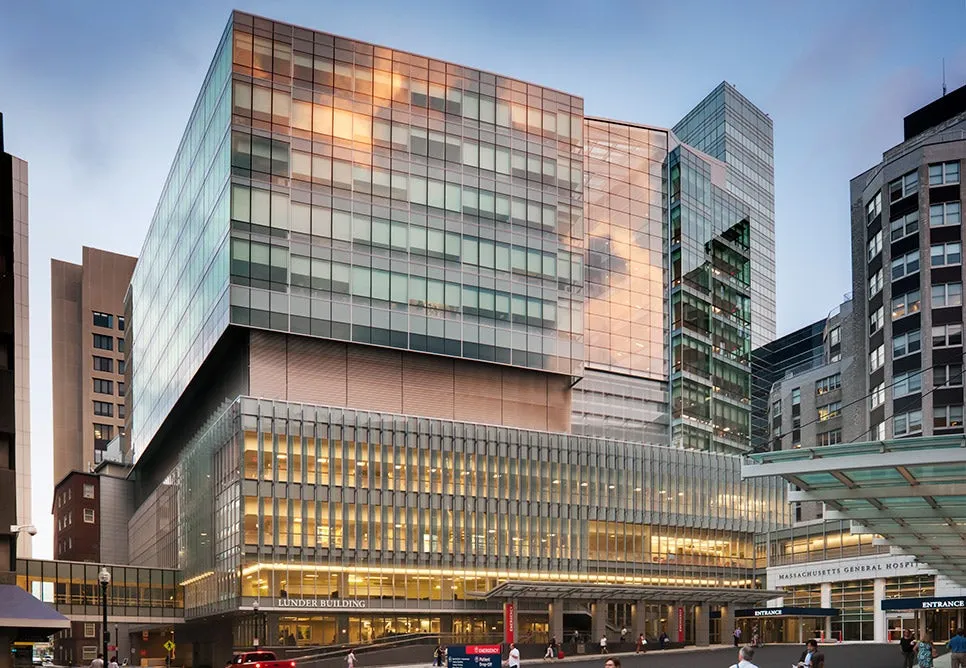 Photo: Massachusetts General Hospital, via architizer-prod.imgix.net
The failure haunted Wells, but his discovery had planted a seed. Other physicians began experimenting with nitrous oxide and other gases. Dr. William Morton successfully demonstrated ether anesthesia at the same hospital in 1846, launching the age of surgical anesthesia.
From Sideshow to Surgery
The transformation was remarkable. Within a decade, anesthesia had spread across America and Europe. Surgeries that were previously impossible due to pain became routine. Complex operations could be performed while patients slept peacefully, unaware of the life-saving procedures being performed on their bodies.
Amputations, tumor removals, and abdominal surgeries—all previously limited by patients' ability to endure pain—suddenly became viable medical options. The mortality rate from surgical shock dropped dramatically.
All because a store clerk tripped over a bench during a carnival act.
The Tragic Pioneer
Sadly, Wells never received proper recognition during his lifetime for launching the anesthesia revolution. The failed demonstration haunted him, and disputes over priority with other physicians led to bitter legal battles.
Wells became increasingly erratic, experimenting with chloroform and other substances. In 1848, just four years after his discovery, he died by suicide in a New York jail cell after being arrested for throwing sulfuric acid on two women while under the influence of chloroform.
He died not knowing that his observation at a traveling show had fundamentally changed medicine forever.
The Accidental Revolution
Wells' story illustrates how medical breakthroughs often emerge from the most unexpected circumstances. The systematic study of anesthesia, the careful development of surgical protocols, the establishment of medical standards—all of that came later.
The spark that ignited the anesthesia revolution was pure accident: a carnival performer's clumsy fall and one dentist's ability to recognize the extraordinary in the ordinary.
Legacy of a Laughing Gas Show
Today, millions of surgical procedures are performed annually under anesthesia. From routine dental work to complex heart surgery, the ability to eliminate pain during medical procedures is so fundamental to modern medicine that we take it for granted.
Yet this entire revolution traces back to that December evening in Hartford when Samuel Cooley stumbled into a bench and felt nothing. Gardner Colton's traveling show was just entertainment, but it accidentally became the birthplace of modern anesthesia.
The next time you visit a dentist or undergo surgery without pain, remember that your comfort exists because a 19th-century carnival act went hilariously wrong, and one observant dentist recognized that sometimes the most important discoveries happen when we're just trying to have a good time.